When the World Is Too Loud Inside: Autism, cPTSD, and the Quiet Battle Within
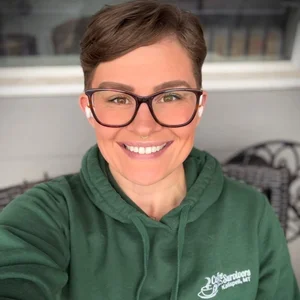
By Frankie — Disabled Air Force Veteran | Chronic Illness Advocate | Social Scientist
⚠️ Trigger Warning: Suicidal Ideation
The Noise No One Else Hears
There’s a kind of noise that doesn’t live outside you — it hums beneath your skin.
It’s the sound of a world that’s too bright, too loud, too fast — and a brain trying to process it all without breaking.
For years, I thought that noise was normal. The constant vigilance, the exhaustion after every conversation, the invisible weight pressing on my chest. I learned to smile through it, to mask, to blend. I learned to look “fine” even when my mind was screaming for quiet.
Autism taught me how to survive a world not built for me.
Trauma taught me how to fear it.
Complex trauma taught me how to disappear inside it.
When Safety Isn’t Safe
People talk about PTSD like it’s only flashbacks or nightmares. But for many of us, trauma didn’t come from one moment — it came from many.
My life has carried layers of trauma:
An abusive childhood that taught me to walk on eggshells.
Military sexual trauma that fractured my sense of safety in my own body.
Domestic abuse that twisted love into something unrecognizable.
Medical trauma that reminded me again and again that being believed is a privilege, not a guarantee.
Each wound carved its own echo into my nervous system, compounding into what clinicians call Complex PTSD — cPTSD.
But to me, it just feels like never being able to fully exhale.
And when you’re autistic, that trauma hits differently.
Our brains are estimated to process up to 42% more sensory and contextual information than the average brain. While others see a room, we experience the hum of the lights, the weight of the air, the tension behind every word. The world is louder, brighter, faster — and it doesn’t stop.
So even without the big traumas, life itself is already a battlefield. Add years of abuse, betrayal, and medical harm, and the result is a nervous system that’s always bracing for impact.
It’s no wonder that so many autistic people live in a constant state of trauma adaptation.
We’re not fragile — we’ve simply been asked to carry more than most people can comprehend.
The Loneliness of Being Misunderstood
Masking is supposed to keep you safe. But over time, it becomes another kind of prison.
You forget what your real voice sounds like — or whether it would even be heard if you used it.
I learned to hide everything that didn’t make sense to others: my intensity, my sensitivity, my shutdowns. I learned to apologize for the ways my brain processes the world. I learned that the more I explained, the more misunderstood I became.
And that’s when the silence started to sound seductive.
It wasn’t that I wanted to die. It was that I didn’t know how to keep living in a world that constantly told me my way of existing was wrong.
Suicidal ideation doesn’t always look like wanting to end your life — sometimes it’s just wanting to pause it. To find a way out of the endless noise, guilt, and fatigue.
Research shows autistic people are up to nine times more likely to die by suicide than the general population.
Autistic women and those with cPTSD face the highest risk, not because we lack resilience — but because we’ve been chronically invalidated, over-stimulated, and abandoned by the systems meant to help.
When the world punishes you for existing authentically, it’s not that you want to die — it’s that you want the pain of being unseen to stop.
The Ache of Connection
Relationships are one of the hardest parts of being autistic.
I’ve spent my life trying to love people in the way that feels truest to me — deeply, consistently, and with everything I have — only to watch them drift away as if my love were too heavy to carry.
I never quite feel like I fit anywhere. I can be surrounded by people and still feel like I’m standing behind glass.
Over time, I’ve started to believe I’m unlovable — that something about me repels closeness, even when all I want is to connect.
People I thought loved me, people I poured myself into, seem to fade away.
The misunderstanding — the gap between what I mean when I say I care and what others hear — is like a language barrier I can’t seem to cross.
To me, love means showing up. It means consistency, honesty, loyalty.
But for many, love seems to mean performance — the right words, the right tone, the right gestures.
And that deviation leaves me feeling like I’ve come from another planet. Like I’m fluent in a language no one else wants to learn.
Some days, I feel like an alien — watching a species I’ll never quite belong to, loving them fiercely anyway.
The Lost Childhood of the Masked
Looking back, I realize that autistic children rarely get the chance to truly be children.
While others were discovering who they were, I was studying how to be someone else.
Every social cue, every tone of voice, every reaction — I analyzed them like survival manuals.
By the time most people start forming a sense of identity, we’ve already built ours around avoidance:
Don’t be too loud.
Don’t be too honest.
Don’t be too much.
We become experts at pretending long before we ever get to just be.
And by adulthood, many of us realize we have no idea who we are — only who we’ve been told to be.
That’s where I am now: learning who I am for the first time.
Unlearning the rules that kept me safe but small.
Reclaiming the childhood I never got to live — the one spent observing instead of belonging.
Burnout, Not Brokenness
What many doctors mistake for depression in autistic people is often burnout — and they are not the same thing.
Depression implies chemical imbalance, something wrong within us. Burnout, though, is a natural response to a world that constantly overwhelms, misunderstands, and demands more than we can give.
We’re not broken. We’re exhausted.
We’re not sad without reason — we’re grieving a world full of injustice, contradiction, and tyranny.
Our so-called “depression” is often a moral and sensory rebellion — a deep awareness that something is wrong out there, not in here.
It’s the weight of compassion without relief. It’s empathy without rest.
It’s waking up every day to systems that silence, exploit, and discard — and still choosing to keep trying anyway.
Autistic burnout isn’t a flaw in character. It’s evidence of endurance in an unrelenting world.
Belonging, Letting Go, and Becoming
The older I get, the more I understand the shape of loneliness.
It’s not just being alone — it’s wanting to belong so deeply that it hurts.
For most of my life, I chased belonging like it was oxygen. I wanted to be understood, accepted, chosen — to find my place among people who wouldn’t ask me to shrink. But over time, I learned that sometimes peace is found not in being accepted by others, but in accepting myself.
I’ve started to find solace in solitude — in being comfortable with who I am, even if that means walking alone.
I’ve learned to let people go when they can’t reciprocate my energy or meet me in my depth.
I still love them — just from afar.
Instead of begging to belong, I’m focusing on becoming:
Becoming the woman I needed when I was a child.
Defining my morals.
Choosing who I want to be.
And raising my neurodiverse children to live freely — to know they never have to hide or shape-shift to be worthy of love and acceptance. To never feel like things would feel better if they just didn’t exist.
My goal isn’t to teach them to fit in.
It’s to teach them to stand tall in exactly who they are — no boundaries, no masks, no shame.
The Rebellion of Authentic Minds
Many of us with autism don’t believe in hierarchy, power games, or the unspoken social rules that demand we “know our place.”
Our brains are wired for truth — not control. For justice — not dominance.
That’s why so many of us resist systems that exploit, manipulate, or silence. We don’t rebel because we’re difficult; we rebel because we see clearly what others have been taught to ignore. We reject conformity because it costs us our peace, our integrity, our very sense of self.
That same rebellion — that refusal to perform — is what helps us survive trauma, too.
It’s what drives our advocacy, our empathy, our storytelling. It’s what keeps us reaching for authenticity in a world that keeps demanding that we mask.
Learning to Stay
Healing didn’t happen because I stopped breaking. It happened because I stopped hiding the broken parts.
I began to understand that my cPTSD wasn’t a weakness — it was a survival mechanism that kept me alive in impossible conditions.
That my autistic brain wasn’t defective — it was doing exactly what it was designed to do: protect me.
I started writing again. Sitting in the sun. Breathing through the sensory storms and embracing my meltdowns instead of apologizing for them.
I found peace not by silencing the noise, but by learning its rhythm — by letting myself exist as I am, not as the world wanted me to be.
And with all of that being said, it’s not surprising that my college education is in Sociology.
After a lifetime spent trying to understand people — their behaviors, their hierarchies, their contradictions — I now study the very systems that shaped me.
It’s both healing and haunting to recognize the patterns from the outside looking in: to see how structures that were supposed to protect us often perpetuate the pain instead.
But this time, I’m not studying people to survive them.
I’m studying them to understand how to change the system — and maybe, how to change myself.
If You’re There Too
If you’re in that quiet battle — the one no one sees, the one where you wonder if you can keep going — please know this: you are not a burden.
Your exhaustion is valid. Your confusion is valid. Your survival is proof of strength.
There’s no shame in needing help. No weakness in needing rest.
Stay. Breathe. Reach for the light, even when it feels far away. You are not too much — the world has simply been too small for what you carry.
You are never alone in this.
If this resonates with you please follow my journey @thechronicallyresilient.
And as always, Stay Resilient ❤️🩹