When the Wild Becomes a Mirror: Hunting With a Brain Injury, POTS, and Fading Senses
Hunting with POTS, visual processing issues, and brain injury isn’t just physically demanding — it’s a daily lesson in resilience, adaptation, and honoring your limits.
By Frankie — Disabled Air Force Veteran | Chronic Illness Advocate | Medical Nerd
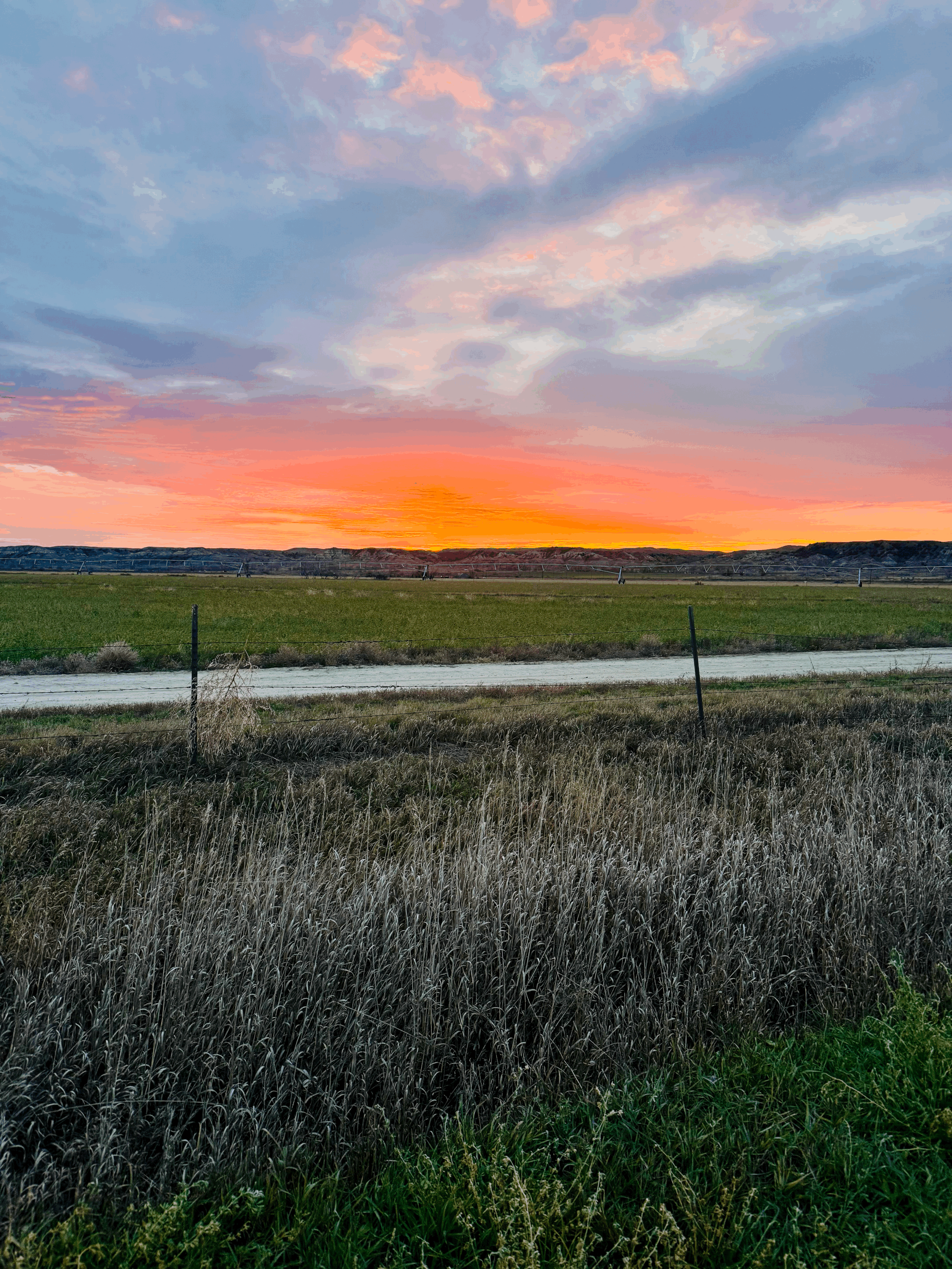
There’s something about watching the sun crawl across the eastern Montana sky that reminds me I’m still here — still fighting, still learning what this new version of my body can and can’t do.
This year’s antelope hunt wasn’t just about the chase. It was about reckoning — with my body, with my brain, and with the stillness that comes after realizing even the wild doesn’t quiet the storm inside you anymore.
Between the Wind and the Wild: When Your Eyes Aren’t Your Own
“It’s like trying to hold still in an earthquake — my vision feels shaky, like I can’t anchor to the world long enough to aim, to trust my body.”
The rolling hills of eastern Montana are gentle — slow sloping, wind-laced, and dotted with sage — but even walking them feels like scaling a mountain. The moment there’s any incline, my heart rate spikes to nearly 170 bpm. I live with POTS — and the unpredictability of how my body responds means I never fully know if it’s going to cooperate.
And when my heart is pounding, my vision starts to go with it.
My brain can’t focus the way it used to. Objects feel “shaky,” and no matter how much I steady my breathing or brace my rifle, the world won’t hold still. Even spotting an antelope — something I could do in seconds a few years ago — becomes almost impossible through a scope that never stops quivering.
When my heart races, my ability to see declines. But that’s not by accident.
Why Vision and POTS Are Linked
POTS (Postural Orthostatic Tachycardia Syndrome) forces your heart to work overtime just to keep blood circulating, especially when you stand or exert yourself.
When your heart rate skyrockets:
Your body diverts blood from “non-essential” systems (like vision and digestion) to protect vital organs.
Result: Blurry, shaky vision and poor visual focus.
Add in brain-injury-related visual processing issues, and it becomes a full-blown sensory bottleneck.
Losing My Senses, One Step at a Time
“Hunting demands silence. But how do you stay silent when you can’t hear yourself?”
I can’t wear my hearing aids while I hunt — sweat from POTS could fry them, and they’re not waterproof. That means I enter the field unable to fully hear my surroundings.
Every step becomes a gamble:
Am I too loud? Am I missing something? Am I safe?
I rely on my husband, who walks in front of me — his footsteps become my guide, his silence my cue. I use all my energy to keep my eyes on his heels, just trying to stay quiet and balanced in a world that now feels foreign in both sound and sight.
Even speaking becomes complicated. I can’t tell how loud I am, and sometimes I accidentally whisper too loudly — breaking the stillness we’ve worked so hard to create.
“When your body becomes both the barrier and the battleground, even whispering is a test of control.”
The Moment I Knew the Hunt Was Over
We hunted for four days — two trips out per day. I pushed hard, watching the sunrise in awe, enduring windburn on my face and fatigue in open defiance of my symptoms. But on Tuesday morning, as we crested a hill in search of a herd we’d been tracking, it hit me like a wave:
I had nothing left to give.
My brain fogged. Speech processing started crashing. Noise, balance, breathing — every system in my body was begging me to stop. The antelope were still out there, but I wasn’t.
So we called the hunt.
I walked away empty-handed — but not empty-hearted.
This Body Still Belongs Outside
“Grief lives here alongside grit. I hate what I’ve lost. But I love that I still go.”
Hunting isn’t just something I do — it’s something I share. My husband and I rebuilt parts of our relationship in these landscapes. I learned to slow down again, to listen to the wind and let nature carry the weight of what I can no longer hold.
I didn’t grow up thinking “someday my brain injury will affect my ability to aim a rifle,” but here we are. My MRI shows tissue damage and encephalomalacia — silent, structural reminders of what gamma knife surgery cost me. And yet:
I am still here.
I still show up.
I still learn new ways to live.
Because being alive isn’t about bouncing back.
It’s about adapting forward.
The Damage You Can’t See
My MRI shows:
Encephalomalacia and gliosis: Brain tissue damage and scarring from radiation and A/V malformation.
Visual processing issues: From tissue loss in areas related to perception and eye tracking.
Major Neurocognitive Disorder: Diagnosis stemming from these changes.
That’s why I’m starting occupational and speech therapy — to regain even a sliver of control over what’s been lost.
Ending on Purpose
I used to think pushing through pain meant I was strong. That ignoring my limits made me worthy.
Now I know this:
Honoring my limitations is how I stay in the game.
I left the wild empty-handed this time. But I walked away with the kind of pride you can’t hang on a wall — the kind that exists in every breath I didn’t give up, every step I took beside the man who taught me to love hunting again.
I’m not done. I’m just learning how to hunt a different way.
If this resonates with you, and you’d like to follow my journey of neurodivergence, chronic illness, healing, and everyday resilience — you can follow me on social media @thechronicallyresilient
And as always, Stay Resilient ❤️🩹
Becoming My Own Chronic Disease Manager: How a Gamma Knife, Pulmonary Embolisms, and a Rare Autoimmune Disease changed everything
When a routine CT scan revealed more than just blood clots, my life changed forever. What began as a life-saving brain procedure led to a cascade of rare conditions — including pulmonary sarcoidosis, a disease that quietly stole my breath and tested every ounce of strength I had left. This is the story of how I went from Air Force medic to chronic disease manager, learning to trust my instincts, advocate fiercely, and find resilience in the spaces where medicine had no clear answers.
By Frankie
Disabled Air Force Veteran | Chronic Illness Advocate | Medical Nerd
Understanding Sarcoidosis — A Rare and Misunderstood Disease
Sarcoidosis is one of those conditions that sounds simple when you first read about it — and yet the more you learn, the more mysterious it really is. It’s a rare autoimmune disease that causes the body to form tiny clumps of inflammatory cells called granulomas in various organs. These granulomas can appear anywhere — most commonly in the lungs, lymph nodes, skin, or eyes — and they can either quietly exist without causing problems or slowly interfere with how those organs function.
What makes sarcoidosis so complex is that no one knows exactly why it happens. It’s believed to be triggered by an abnormal immune response, possibly due to genetics or environmental factors, but there’s no single cause and no single pattern. For some, it’s mild and temporary. For others, it’s chronic, progressive, and life-altering.
Pulmonary sarcoidosis — when it affects the lungs — can cause symptoms like persistent cough, shortness of breath, and fatigue. But sarcoidosis is notorious for masquerading as other diagnoses, because its symptoms are often nonspecific and atypical. Fatigue, shortness of breath, joint pain, rashes, and neurological changes can all be explained by a dozen other conditions. That’s why it often goes undiagnosed for months or years, or is discovered incidentally during imaging for something else entirely.
For me, sarcoidosis entered my story not as a diagnosis I was searching for, but as a hidden thread running through a series of medical crises, ultimately revealing itself after careful observation and follow-up. I wholeheartedly believe that my Gamma Knife radiation surgery on January 31, 2019, acted as a trigger that set in motion a cascade of conditions — from my pulmonary embolisms to sarcoidosis and my hearing loss — amplified or exacerbated by my environmental factors and underlying vulnerabilities.
My Unexpected Diagnosis — When a CT Scan Changed Everything
On January 31, 2019, I had Gamma Knife radiation to treat my arteriovenous malformation — a tangled cluster of blood vessels in my brain that I had lived with for years. It was supposed to be a precise solution to a known problem. But just five days later, on February 5th, I was in the hospital again — this time fighting for my life after developing bilateral pulmonary embolisms. Blood clots had lodged themselves in both of my lungs.
The CT scan that confirmed the embolisms did more than identify the clots. It also revealed something unexpected: bilateral hilar lymphadenopathy — enlarged lymph nodes near the lungs — which raised concerns for pulmonary sarcoidosis. At that time, I was asymptomatic, and with the immediate crisis being my pulmonary embolisms, the finding was labeled “incidental.”
Even then, my instincts kicked in. My background as an Air Force medic gave me a strong understanding of anatomy and pathophysiology, and my autistic special interests — deep dives into research and medicine — had always driven me to dig deeper, to connect dots that others might overlook. I didn’t know it yet, but those instincts would soon become my lifeline.
Because of blood clotting risks, I had to switch from my regular birth control pills to the mini pill — and by July 2019, I was unexpectedly pregnant with our third child. The pregnancy paused everything: no imaging, no biopsies, no follow-up on the incidental CT finding. So I focused on staying healthy and managing my other conditions, knowing that the mystery of the lymph nodes would have to wait.
When I delivered in March 2020, we were discharged from the hospital just one day before the world shut down due to COVID-19. I came home, exhausted and adjusting to life with a newborn — only to develop hospital-acquired pneumonia. Once that cleared, my cough didn’t go away. It lingered and grew worse over time, accompanied by shortness of breath and overwhelming fatigue.
By May 2020, after follow-up imaging, surgical biopsy and evaluation, I was officially diagnosed with pulmonary sarcoidosis. At first, I thought the diagnosis might be another layer of confusion or frustration — another rare condition to navigate. But in reality, it was the beginning of a chapter that would teach me the depth of resilience, self-advocacy, and patience.
Living With Pulmonary Sarcoidosis — The Slow Loss of Air
After our youngest son was born, my body didn’t bounce back the way I expected. Fatigue hit me in waves I hadn’t known were possible. Walking up a flight of stairs left me breathless. Simple exertion became an ordeal. My body, once strong and capable from years of military service and outdoor adventure, now betrayed me in ways I had never imagined.
Hunting trips that had been a source of joy and connection became grueling tests of endurance. I remember one trip in particular — early mornings, scanning the horizon for antelope with my husband. By mid-morning, I was so air-hungry I felt like I might pass out. No matter how deeply I breathed, it wasn’t enough. I had to retreat to the hotel afterward, sleeping until the next day just to recover enough to try again. Some mornings I couldn’t go at all, and on other days I could only hunt in the afternoon.
It was during our last hunting trip in September 2021 that another challenge struck. One moment, I was listening to music and scanning the landscape, and the next, my left ear went suddenly muffled — like the ringing and muffled sensation after a firearm discharge, but there was no firearm discharge and this time there was no relief. My hearing never fully returned.
I immediately did a deep dive into research. I discovered that Gamma Knife radiation can, in rare cases, cause hearing loss. I reached out to the neurosurgeon and radiation oncologist who had performed the procedure and presented my findings. They denied that the surgery could have caused my hearing loss and effectively sent me in the wrong direction.
With surgery ruled out as a likely cause, I moved on to the next possibility: sarcoidosis. But for sarcoidosis to affect hearing, it would have to be neurosarcoidosis, which is far rarer than pulmonary sarcoidosis — essentially highly unlikely. Because there were no visible brain lesions, a biopsy wasn’t possible, leaving my doctors without a clear explanation. Eventually, my sarcoidosis specialists at UCSF diagnosed me with neurosarcoidosis, which led to steroid IV infusions and low dose chemotherapy IV infusions. These infusions temporarily improved my hearing, suggesting that something rheumatological may indeed be affecting my auditory system — though ultimately some of the treatments ended up being unnecessary.
Sarcoidosis’s ability to masquerade as other conditions made this journey even more complex — each symptom could have been explained by something else entirely, which meant I had to rely on meticulous observation, research, and self-advocacy to understand what was really happening in my body.
Around the same time, I was also on prednisone to treat sarcoidosis, which caused rapid weight gain and the classic “moon face,” and I had begun methotrexate, a low-dose chemotherapy medication meant to control inflammation. The combination was brutal. Fatigue became nearly constant. Appetite vanished. Nausea was a daily companion. Within a year of my son’s birthday, I looked at family photos and barely recognized myself — my body had changed despite my efforts to eat well and remain active.
Every day became a balancing act: managing treatment side effects, navigating breathlessness, keeping up with my children, and trying to maintain the life I had known before illness took hold. And yet, even in the fatigue, pain, and frustration, I learned something vital: I was the person who could connect the dots, advocate for myself, and push forward when medical systems couldn’t fully see the whole picture.
Becoming My Own Chronic Disease Manager
Living with multiple rare and overlapping conditions taught me something vital: in many ways, no one else will see your body the way you do. I quickly became my own advocate, researcher, and sometimes even savior.
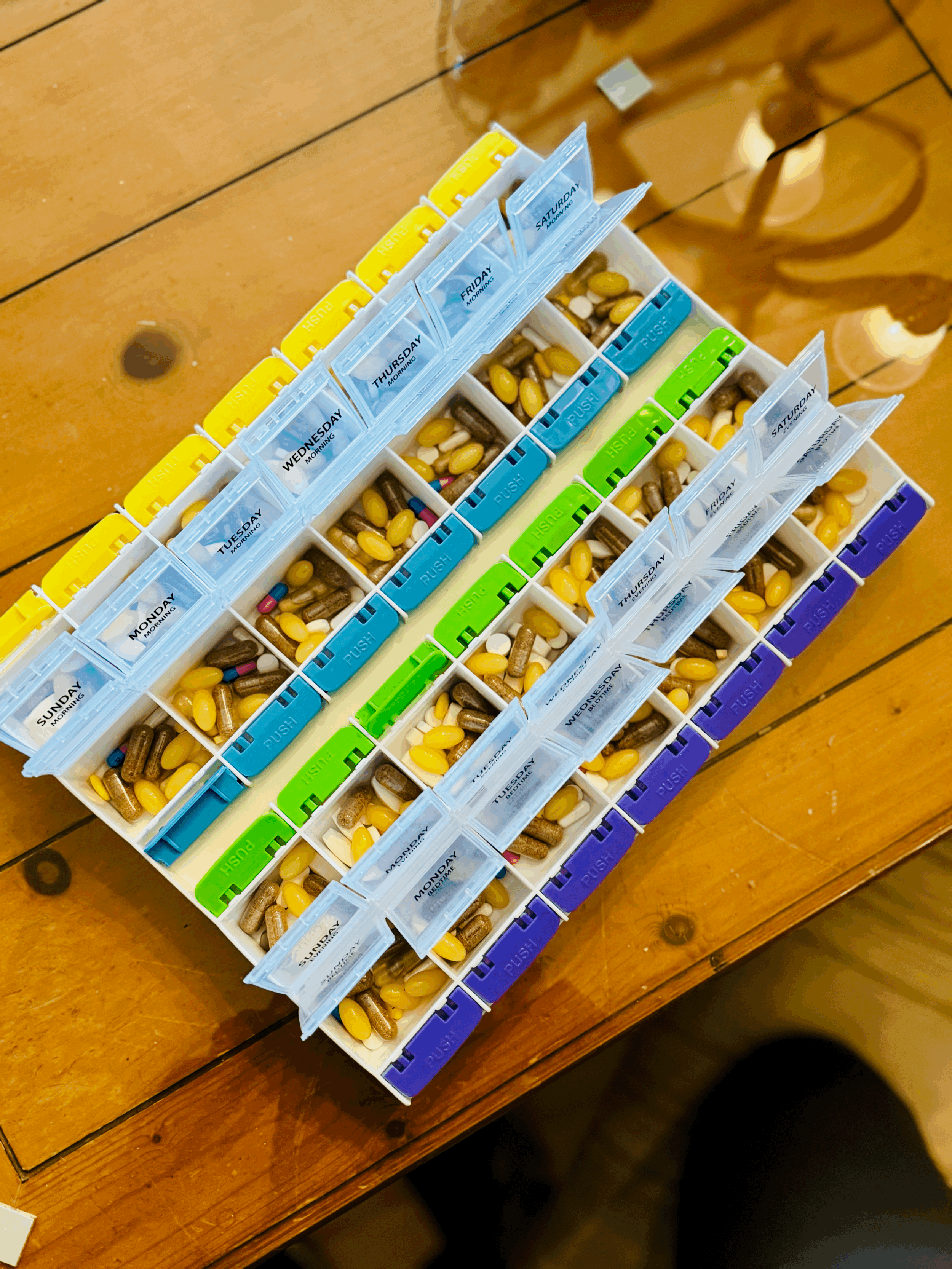
I have a primary care provider through the VA who is supportive, but in practice, my care often depends on my initiative. I request referrals, track labs, notice urgent changes, and ensure nothing critical slips through the cracks. I see an Ehlers-Danlos Syndrome (EDS) specialist who oversees my treatment for chronic pain, MCAS, POTS, and hypotension, but I am the one doing the detailed research on my conditions. I come to appointments armed with notes, questions, and observations — often including things that had been missed or overlooked.
My experience as an Air Force medic has been invaluable. It trained me to understand anatomy, physiology, and pathology in a way that most patients never do. Coupled with my autistic special interests — deep, focused study of research and medicine — I can comprehend complex, overlapping conditions and anticipate complications. That combination has quite literally saved my life more than once: from noticing patterns that led to early intervention with my AVM and pulmonary embolisms to advocating for treatments for sarcoidosis before it could cause irreversible damage.
Becoming my own chronic disease manager isn’t just about knowledge. It’s about resilience, persistence, and self-trust. It’s about keeping going when the medical system doesn’t have all the answers, when tests are delayed, and when treatments come with burdensome side effects. Even in the hardest moments — when breathlessness, fatigue, hearing loss, and medication side effects threatened to define my life — I learned that understanding my own body and advocating for it was empowering.
In my view, the Gamma Knife surgery may have been the spark that triggered this cascade of overlapping conditions — a complex interplay of genetics, immune responses, and environmental factors. Recognizing that possibility helped me connect the dots and pursue the most appropriate care, even when conventional medicine offered no clear explanation.
Reflection — What I’ve Learned From My Body
Living through rare and overlapping conditions has taught me lessons no textbook could ever convey. My body has been unpredictable, challenging, and at times frightening. It has pushed me to my limits, forced me to confront vulnerability, and revealed the fragility of life in ways I never anticipated.
And yet, it has also shown me strength — not the kind measured by stamina or endurance alone, but the quiet, persistent kind that comes from knowing your body intimately, trusting your instincts, and advocating fiercely when the system falls short. I have learned that knowledge is power, that research and observation are tools of survival, and that the most effective medicine is often a combination of self-awareness, preparation, and courage.
Sarcoidosis is no joke. Pulmonary sarcoidosis can be life-altering, even life-threatening, and living through its symptoms taught me how quickly health can shift and how crucial timely intervention is. But today, I am profoundly grateful: my sarcoidosis is in remission, my lungs are symptom-free, and I can breathe without limitation — a gift I no longer take for granted.
I have also learned to embrace the unpredictability. My journey — from Gamma Knife surgery to pulmonary embolisms, from an incidental sarcoidosis finding to post-pregnancy chronic illness, from hunting trips that tested every breath to sudden hearing loss — has shown me that life can change in an instant, but so can resilience. Each challenge has shaped me, taught me to adapt, and revealed strengths I didn’t know I had.
Ultimately, this journey is about more than disease. It’s about trust: trust in my own knowledge, my own body, and my capacity to navigate complexity when no one else can. It’s about finding empowerment in the face of uncertainty, and about realizing that even when life becomes unpredictable and exhausting, we can still find ways to live fully, learn deeply, and move forward with hope.
I am no longer just a patient; I am a chronic disease manager, a researcher, an advocate, and a survivor. Through every setback, every unexpected diagnosis, and every day of fatigue and breathlessness, I have discovered that resilience isn’t about returning to who you were — it’s about learning to thrive in the body and the life you have today.
Follow me on YouTube, Facebook, and Instagram for an inside look at my journey navigating rare and complex health conditions, sharing insights from my research and experiences, and connecting with a community that understands the challenges of chronic illness. Join me for personal stories, tips, advocacy, and moments of resilience — and be part of a space where curiosity, knowledge, and support meet.
And as always, Stay Resilient ❤️🩹