Becoming My Own Chronic Disease Manager: How a Gamma Knife, Pulmonary Embolisms, and a Rare Autoimmune Disease changed everything
When a routine CT scan revealed more than just blood clots, my life changed forever. What began as a life-saving brain procedure led to a cascade of rare conditions — including pulmonary sarcoidosis, a disease that quietly stole my breath and tested every ounce of strength I had left. This is the story of how I went from Air Force medic to chronic disease manager, learning to trust my instincts, advocate fiercely, and find resilience in the spaces where medicine had no clear answers.
By Frankie
Disabled Air Force Veteran | Chronic Illness Advocate | Medical Nerd
Understanding Sarcoidosis — A Rare and Misunderstood Disease
Sarcoidosis is one of those conditions that sounds simple when you first read about it — and yet the more you learn, the more mysterious it really is. It’s a rare autoimmune disease that causes the body to form tiny clumps of inflammatory cells called granulomas in various organs. These granulomas can appear anywhere — most commonly in the lungs, lymph nodes, skin, or eyes — and they can either quietly exist without causing problems or slowly interfere with how those organs function.
What makes sarcoidosis so complex is that no one knows exactly why it happens. It’s believed to be triggered by an abnormal immune response, possibly due to genetics or environmental factors, but there’s no single cause and no single pattern. For some, it’s mild and temporary. For others, it’s chronic, progressive, and life-altering.
Pulmonary sarcoidosis — when it affects the lungs — can cause symptoms like persistent cough, shortness of breath, and fatigue. But sarcoidosis is notorious for masquerading as other diagnoses, because its symptoms are often nonspecific and atypical. Fatigue, shortness of breath, joint pain, rashes, and neurological changes can all be explained by a dozen other conditions. That’s why it often goes undiagnosed for months or years, or is discovered incidentally during imaging for something else entirely.
For me, sarcoidosis entered my story not as a diagnosis I was searching for, but as a hidden thread running through a series of medical crises, ultimately revealing itself after careful observation and follow-up. I wholeheartedly believe that my Gamma Knife radiation surgery on January 31, 2019, acted as a trigger that set in motion a cascade of conditions — from my pulmonary embolisms to sarcoidosis and my hearing loss — amplified or exacerbated by my environmental factors and underlying vulnerabilities.
My Unexpected Diagnosis — When a CT Scan Changed Everything
On January 31, 2019, I had Gamma Knife radiation to treat my arteriovenous malformation — a tangled cluster of blood vessels in my brain that I had lived with for years. It was supposed to be a precise solution to a known problem. But just five days later, on February 5th, I was in the hospital again — this time fighting for my life after developing bilateral pulmonary embolisms. Blood clots had lodged themselves in both of my lungs.
The CT scan that confirmed the embolisms did more than identify the clots. It also revealed something unexpected: bilateral hilar lymphadenopathy — enlarged lymph nodes near the lungs — which raised concerns for pulmonary sarcoidosis. At that time, I was asymptomatic, and with the immediate crisis being my pulmonary embolisms, the finding was labeled “incidental.”
Even then, my instincts kicked in. My background as an Air Force medic gave me a strong understanding of anatomy and pathophysiology, and my autistic special interests — deep dives into research and medicine — had always driven me to dig deeper, to connect dots that others might overlook. I didn’t know it yet, but those instincts would soon become my lifeline.
Because of blood clotting risks, I had to switch from my regular birth control pills to the mini pill — and by July 2019, I was unexpectedly pregnant with our third child. The pregnancy paused everything: no imaging, no biopsies, no follow-up on the incidental CT finding. So I focused on staying healthy and managing my other conditions, knowing that the mystery of the lymph nodes would have to wait.
When I delivered in March 2020, we were discharged from the hospital just one day before the world shut down due to COVID-19. I came home, exhausted and adjusting to life with a newborn — only to develop hospital-acquired pneumonia. Once that cleared, my cough didn’t go away. It lingered and grew worse over time, accompanied by shortness of breath and overwhelming fatigue.
By May 2020, after follow-up imaging, surgical biopsy and evaluation, I was officially diagnosed with pulmonary sarcoidosis. At first, I thought the diagnosis might be another layer of confusion or frustration — another rare condition to navigate. But in reality, it was the beginning of a chapter that would teach me the depth of resilience, self-advocacy, and patience.
Living With Pulmonary Sarcoidosis — The Slow Loss of Air
After our youngest son was born, my body didn’t bounce back the way I expected. Fatigue hit me in waves I hadn’t known were possible. Walking up a flight of stairs left me breathless. Simple exertion became an ordeal. My body, once strong and capable from years of military service and outdoor adventure, now betrayed me in ways I had never imagined.
Hunting trips that had been a source of joy and connection became grueling tests of endurance. I remember one trip in particular — early mornings, scanning the horizon for antelope with my husband. By mid-morning, I was so air-hungry I felt like I might pass out. No matter how deeply I breathed, it wasn’t enough. I had to retreat to the hotel afterward, sleeping until the next day just to recover enough to try again. Some mornings I couldn’t go at all, and on other days I could only hunt in the afternoon.
It was during our last hunting trip in September 2021 that another challenge struck. One moment, I was listening to music and scanning the landscape, and the next, my left ear went suddenly muffled — like the ringing and muffled sensation after a firearm discharge, but there was no firearm discharge and this time there was no relief. My hearing never fully returned.
I immediately did a deep dive into research. I discovered that Gamma Knife radiation can, in rare cases, cause hearing loss. I reached out to the neurosurgeon and radiation oncologist who had performed the procedure and presented my findings. They denied that the surgery could have caused my hearing loss and effectively sent me in the wrong direction.
With surgery ruled out as a likely cause, I moved on to the next possibility: sarcoidosis. But for sarcoidosis to affect hearing, it would have to be neurosarcoidosis, which is far rarer than pulmonary sarcoidosis — essentially highly unlikely. Because there were no visible brain lesions, a biopsy wasn’t possible, leaving my doctors without a clear explanation. Eventually, my sarcoidosis specialists at UCSF diagnosed me with neurosarcoidosis, which led to steroid IV infusions and low dose chemotherapy IV infusions. These infusions temporarily improved my hearing, suggesting that something rheumatological may indeed be affecting my auditory system — though ultimately some of the treatments ended up being unnecessary.
Sarcoidosis’s ability to masquerade as other conditions made this journey even more complex — each symptom could have been explained by something else entirely, which meant I had to rely on meticulous observation, research, and self-advocacy to understand what was really happening in my body.
Around the same time, I was also on prednisone to treat sarcoidosis, which caused rapid weight gain and the classic “moon face,” and I had begun methotrexate, a low-dose chemotherapy medication meant to control inflammation. The combination was brutal. Fatigue became nearly constant. Appetite vanished. Nausea was a daily companion. Within a year of my son’s birthday, I looked at family photos and barely recognized myself — my body had changed despite my efforts to eat well and remain active.
Every day became a balancing act: managing treatment side effects, navigating breathlessness, keeping up with my children, and trying to maintain the life I had known before illness took hold. And yet, even in the fatigue, pain, and frustration, I learned something vital: I was the person who could connect the dots, advocate for myself, and push forward when medical systems couldn’t fully see the whole picture.
Becoming My Own Chronic Disease Manager
Living with multiple rare and overlapping conditions taught me something vital: in many ways, no one else will see your body the way you do. I quickly became my own advocate, researcher, and sometimes even savior.
I have a primary care provider through the VA who is supportive, but in practice, my care often depends on my initiative. I request referrals, track labs, notice urgent changes, and ensure nothing critical slips through the cracks. I see an Ehlers-Danlos Syndrome (EDS) specialist who oversees my treatment for chronic pain, MCAS, POTS, and hypotension, but I am the one doing the detailed research on my conditions. I come to appointments armed with notes, questions, and observations — often including things that had been missed or overlooked.
My experience as an Air Force medic has been invaluable. It trained me to understand anatomy, physiology, and pathology in a way that most patients never do. Coupled with my autistic special interests — deep, focused study of research and medicine — I can comprehend complex, overlapping conditions and anticipate complications. That combination has quite literally saved my life more than once: from noticing patterns that led to early intervention with my AVM and pulmonary embolisms to advocating for treatments for sarcoidosis before it could cause irreversible damage.
Becoming my own chronic disease manager isn’t just about knowledge. It’s about resilience, persistence, and self-trust. It’s about keeping going when the medical system doesn’t have all the answers, when tests are delayed, and when treatments come with burdensome side effects. Even in the hardest moments — when breathlessness, fatigue, hearing loss, and medication side effects threatened to define my life — I learned that understanding my own body and advocating for it was empowering.
In my view, the Gamma Knife surgery may have been the spark that triggered this cascade of overlapping conditions — a complex interplay of genetics, immune responses, and environmental factors. Recognizing that possibility helped me connect the dots and pursue the most appropriate care, even when conventional medicine offered no clear explanation.
Reflection — What I’ve Learned From My Body
Living through rare and overlapping conditions has taught me lessons no textbook could ever convey. My body has been unpredictable, challenging, and at times frightening. It has pushed me to my limits, forced me to confront vulnerability, and revealed the fragility of life in ways I never anticipated.
And yet, it has also shown me strength — not the kind measured by stamina or endurance alone, but the quiet, persistent kind that comes from knowing your body intimately, trusting your instincts, and advocating fiercely when the system falls short. I have learned that knowledge is power, that research and observation are tools of survival, and that the most effective medicine is often a combination of self-awareness, preparation, and courage.
Sarcoidosis is no joke. Pulmonary sarcoidosis can be life-altering, even life-threatening, and living through its symptoms taught me how quickly health can shift and how crucial timely intervention is. But today, I am profoundly grateful: my sarcoidosis is in remission, my lungs are symptom-free, and I can breathe without limitation — a gift I no longer take for granted.
I have also learned to embrace the unpredictability. My journey — from Gamma Knife surgery to pulmonary embolisms, from an incidental sarcoidosis finding to post-pregnancy chronic illness, from hunting trips that tested every breath to sudden hearing loss — has shown me that life can change in an instant, but so can resilience. Each challenge has shaped me, taught me to adapt, and revealed strengths I didn’t know I had.
Ultimately, this journey is about more than disease. It’s about trust: trust in my own knowledge, my own body, and my capacity to navigate complexity when no one else can. It’s about finding empowerment in the face of uncertainty, and about realizing that even when life becomes unpredictable and exhausting, we can still find ways to live fully, learn deeply, and move forward with hope.
I am no longer just a patient; I am a chronic disease manager, a researcher, an advocate, and a survivor. Through every setback, every unexpected diagnosis, and every day of fatigue and breathlessness, I have discovered that resilience isn’t about returning to who you were — it’s about learning to thrive in the body and the life you have today.
Follow me on YouTube, Facebook, and Instagram for an inside look at my journey navigating rare and complex health conditions, sharing insights from my research and experiences, and connecting with a community that understands the challenges of chronic illness. Join me for personal stories, tips, advocacy, and moments of resilience — and be part of a space where curiosity, knowledge, and support meet.
And as always, Stay Resilient ❤️🩹
Grieving Myself: Living with Dementia as a Young Adult
I’m grieving the person I used to be — the medic, the multitasker, the woman who could remember every detail. After losing my hearing and cognitive function following Gamma Knife radiation, I’ve had to rebuild my identity while living with invisible disabilities the world can’t see. This is my story of autistic burnout, brain injury, and the fight to find purpose in the aftermath.
By Frankie
Disabled Air Force Veteran | Chronic Illness Advocate | Medical Nerd
I’ve been really struggling lately — mentally and physically. My fatigue is worse, my pain is worse, my memory and focus are worse, and even my hearing and ability to process sounds is deteriorating. I’m completely burnt out, and I felt like people needed to hear the real thoughts that constantly plague my mind. I think I’m going into Autistic burnout.
As an Autistic person, I have delayed processing, which means when something happens — happy, sad, or traumatic — I don’t process it at the time. Sometimes it hits minutes later, hours later, days later… or even years later.
The Diagnosis That Changed Everything
I was diagnosed with dementia at 26, but by then, my health had been declining for a few years and I had gone from leading in a high pressure medical environment to being fired for my limitations working as a clinical receptionist... Unfortunately the diagnosis itself fell by the wayside amid the chaos because I simply didn’t have the capacity to fight for it at the time. I was too scared, too tired, too sick.
I lost the version of me who could work, thrive in my special area of interest — medicine. I was sharp, organized, confident. Now, I’m a stay-at-home mom, homeschooling my daughter, and focusing on therapy and medical appointments. I have new purpose — but the grief is still real. Sometimes I wish people understood that losing your hearing or losing your ability to function cognitively feels as if someone has just amputated your arm. I sometimes wish there was a visible sign or indication to prove that yes, I am disabled, but would be insane. I shouldn’t have to prove anything. People should just be more capable of compassion, understanding and empathy. Full stop. Understand us. Accommodate us. Accept US. Just as we accept everyone else.
Coping with Hearing Loss & Cognitive Decline
Along with dementia, I lost my hearing and my ability to process sounds like everyone else. I have to wear hearing aids, and despite using calendars and reminders obsessively, I sometimes show up on the wrong day, at the wrong time, or late.
It’s not just embarrassing — it’s guilt-inducing, because I know my struggles inconvenience others. I’ve always been dependable and punctual, but now I can’t always be the person I used to be.
Phone conversations or any conversation really are extremely difficult because not only do I have hearing loss in both ears so it’s hard to hear on the phone or in a crowded room, I also have auditory processing disorder and memory issues so written communication is honestly the best way to communicate with me if you want me to remember the message you’re trying to get across.
Even on “good” days, I am still sick, still disabled, and still struggling to function in ways most people take for granted.
Anger, Research, and the Medical Response
After my diagnosis, no one cared to investigate the cause of my cognitive changes and hearing loss. I was 26, and no one thought that was alarming so I did what I always do: I hit the research hard.
What I found shocked me: Gamma Knife radiation can cause major neurocognitive disorder (dementia) and hearing loss due to tissue damage. Yet, the medical community refuses to admit it or even investigate it. If I had a confirmed cause, I could accept myself the way I do with my autism. I could explain myself and stop people from assuming, “You just have a lot going on.” This is not the same.
Grieving Myself
I feel like I’m grieving myself — the person I thought I would be. I look back on my military career as a medic and conversations with the doctors I worked with. One of them said, “Sgt, why haven’t you gone to medical school? You’d be an amazing physician.” That memory rips my heart out. I will never be who I wanted to be.
Even as I’m learning to embrace the new me, I am still in deep mourning — a grief so profound I can’t even put it into words. The person I was, the life I imagined, the abilities I had… they’re gone, and some days that loss feels unbearable. It feels like part of me died.
Living with Invisible Disability
What makes this journey almost intolerable is the dismissal from people who say, “Well, you look and sound great!.” While this is not ill intended, it’s harmful because my struggle is invisible. They see a smile and assume I’m fine, but this has been life altering for me.
But I’m still here. I’m still fighting. I’m still showing up — even if no one sees the battles I fight inside. Chronic illness and invisible disability are lonely, but I refuse to stop trying.
Finding Purpose & Resilience
I’m learning, slowly and painfully, to embrace this new version of me. I may not be the person I once was or that I planned on being but I’m still capable of love, resilience, and showing up in my own way. I have a lot to give to the world.
If my story resonates with you — whether you’re navigating chronic illness, brain injury, or invisible disability — you are not alone.
If you don’t live with any of this and are just here to learn then I encourage you to follow me on YouTube, Facebook and Instagram to learn more!
And please, reach out! I love swapping stories and bouncing ideas off of each other to help advocate for our health.
And as always, stay resilient ❤️🩹
My Brain Tried to Kill Me: Surviving a Cerebral AVM
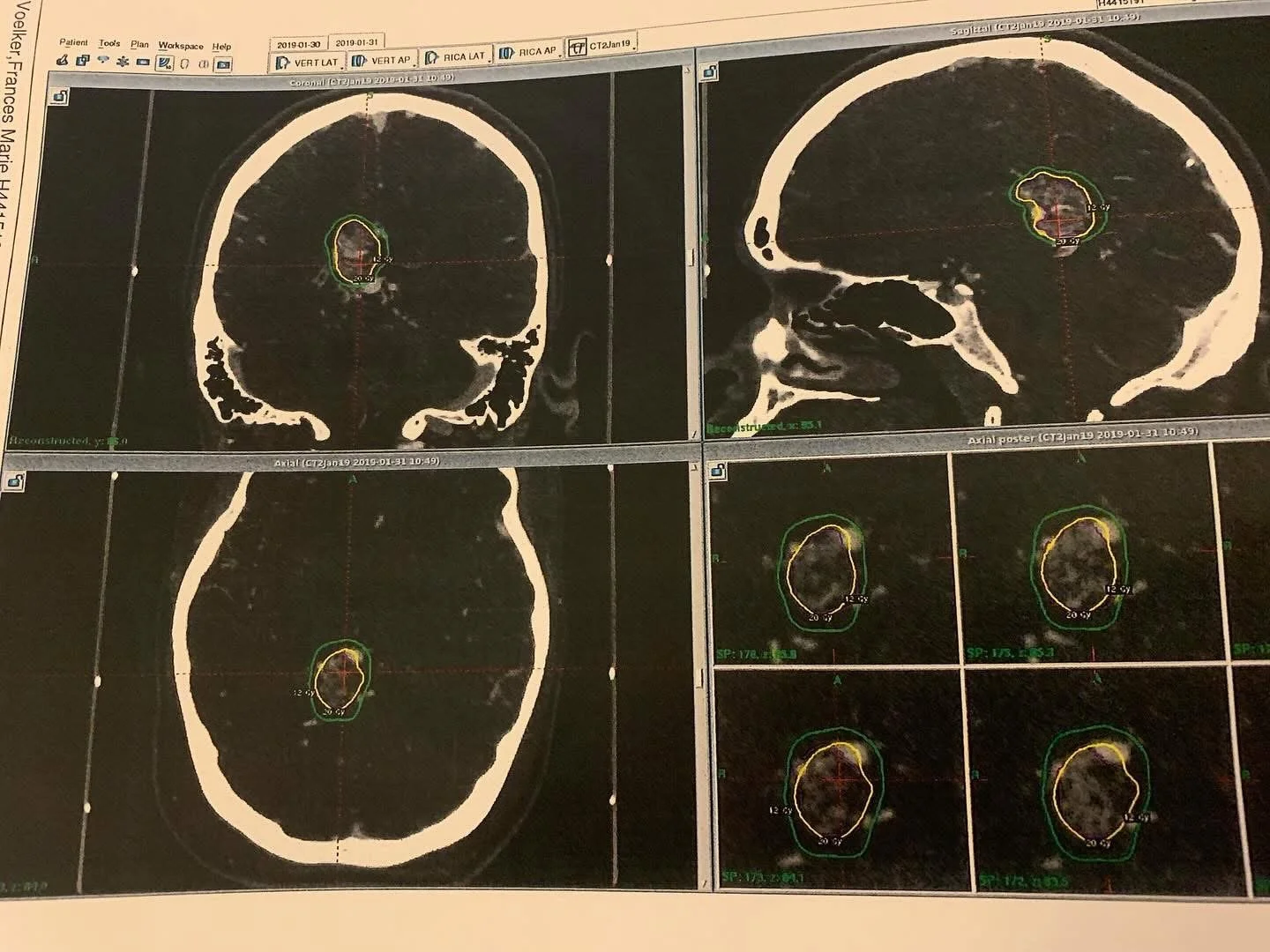
MRI imaging of a cerebral arteriovenous malformation (AVM), showing a complex nidus of abnormal, tangled blood vessels in the brain. This high-grade (Spetzler-Martin Grade 5) AVM carries a significant risk of rupture, necessitating precise intervention and ongoing monitoring.
By Frankie
Disabled Air Force Veteran | Chronic Illness Advocate | Medical Nerd
Hi, I’m Frankie. I’m a 33-year-old disabled Air Force veteran, and I want to tell you about when I learned I had a cerebral arteriovenous malformation (AVM) — and how it almost killed me before I even knew it was there.
This blog is part of my effort to chronicle my medical history in an honest and empowering way — not just for me, but for anyone living with a complex or rare condition. This is my AVM story, and it starts with a whisper in my ear.
What Is a Cerebral AVM?
A cerebral arteriovenous malformation (AVM) is a rare and potentially life-threatening condition where blood vessels in the brain form an abnormal connection between arteries and veins, bypassing capillaries. This creates a tangle of fragile vessels prone to rupture.
Occurs in about 0.05% of the population
Can lead to hemorrhagic stroke if ruptured
Often goes undetected until it bleeds
In my case, I was lucky. My AVM was found before it ruptured — but only because I trusted my instincts and had a provider who listened.
Early Symptoms: When Something Feels Off
In 2018, I started noticing subtle but unusual symptoms:
Pulsatile tinnitus in my right ear (a whooshing sound in rhythm with my heartbeat)
Dizziness and episodes of vertigo
A strange sense that something neurologically wasn’t quite right
These symptoms weren’t severe enough to stop me from functioning, but they persisted — and I couldn’t ignore them.
As a trained Air Force medic, I’d developed a habit of digging deeper into symptoms. I started researching differentials, and one condition kept resurfacing: cerebral AVM. It felt unlikely, but my gut told me not to brush it off.
The MRI That Changed My Life
I confided in a physician I respected deeply — a mentor and colleague. I told him about the symptoms and the concerns I had based on my research.
Instead of dismissing me, he listened.
He ordered an MRI.
I went on a family trip to Hawaii shortly after the scan. When I returned, I hadn’t heard anything, so I checked the results myself at work (as I was authorized to do).
And there it was:
“Cerebral arteriovenous malformation.”
I felt the ground shift beneath me.
A Life-Threatening Diagnosis: Grade 5 AVM
Further evaluation revealed the full picture:
Spetzler-Martin Grade 5 AVM (the highest severity level)
Located in the posterior corpus callosum, deep within the brain
Considered inoperable at the time due to size and location
Here’s the part that really drove it home:
The AVM carried an estimated 3% risk of rupture per year, compounded annually since birth — which translated to a 78% lifetime risk of rupture by the time I was diagnosed.
This wasn’t just serious — it was potentially fatal. But I had options.
My team recommended a non-invasive approach first:
Gamma Knife radiation.
Gamma Knife Radiation: Hope and Risk
In January 2019, I underwent Gamma Knife radiosurgery — a focused radiation treatment designed to gradually shrink the AVM and reduce the risk of rupture.
The procedure itself went well, but soon after, I experienced complications that taught me just how fragile the balance was in my body. Despite the challenges, Gamma Knife was the safest option to treat something inoperable — at least initially.
Why Sharing My Story Matters
Living with a cerebral AVM is a constant reminder of the fragility of life and the power of persistence. Early symptoms can be subtle, and the diagnosis can come as a shock — but timely detection and treatment can save lives.
And if you’re dealing with an AVM, know that you’re not alone. Medical advances and supportive care can make a difference.
Thank you for reading my story. If you found this helpful, please share to raise awareness about cerebral AVMs and the importance of listening to your body.
—
And as always, Stay Resilient ❤️🩹