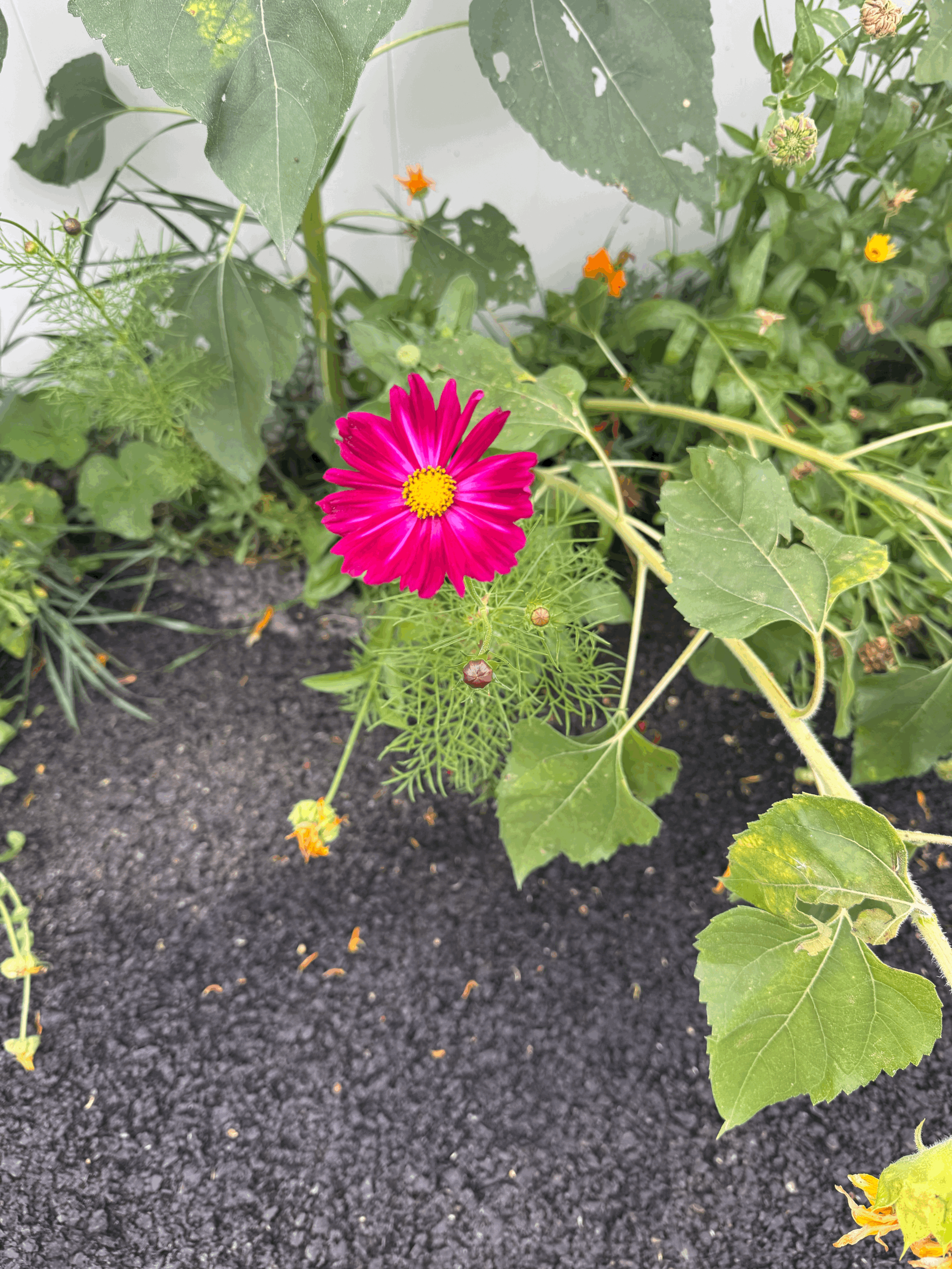
When Words Don’t Translate: Understanding Autistic Communication
Autistic communication isn’t broken — it’s honest.
It’s direct, layered, and rooted in sincerity.
For people like me, connection doesn’t always come through tone or body language — it comes through written words, truth, and intention. This isn’t about attention or likes. It’s about sharing my internal world so others like me can feel a little less alone.
Read When Words Don’t Translate: Understanding Autistic Communication in Blog 2: Autistic Diaries on thechronicallyresilient.com.
And as always, Stay Resilient ❤️🩹
By Frankie — Disabled Air Force Veteran | Chronic Illness Advocate | Social Scientist
People heard the words I said, but not always the meaning. I’d replay conversations in my head, wondering how something said with love came out sounding cold, or how silence meant indifference when it really meant careful processing.
For years, I thought I was broken — too blunt, too literal, too intense. I learned to script my sentences, to soften my truth, to smile when I didn’t understand the joke. But masking that way came at a cost: I lost my voice trying to sound like everyone else’s.
Autistic Communication Isn’t a Flaw
Autistic communication isn’t a flaw in social ability — it’s a difference in wiring, rhythm, and intent.
Where neurotypical language often revolves around implied meaning and social choreography, autistic communication thrives on precision, sincerity, and shared focus. We speak to connect, not to perform.
For many of us, words are weighted — they carry texture, pattern, and truth. We might communicate through patterns, through written words, through parallel play, or even through silence. Our language isn’t missing something; it’s simply built differently.
The Myth of Lack of Empathy
One of the most painful misconceptions about autistic people is that we lack empathy.
That couldn’t be further from the truth.
Many of us feel so deeply that it can be overwhelming. We notice micro-expressions, shifts in tone, the smallest change in someone’s energy. Sometimes we feel others’ emotions so strongly that it’s hard to know where theirs end and ours begin. But the way we express empathy doesn’t always fit what the world expects.
When someone we love is hurting, we might offer solutions instead of comfort because our brains jump straight to fixing the problem. Or we might go quiet — not because we don’t care, but because we’re processing every word carefully to make sure we respond authentically.
In the military, that difference in expression often made me feel misunderstood. My directness was mistaken for coldness, my silence for defiance, my honesty for disrespect. But beneath every blunt statement was a genuine desire to help, to protect, to connect in a world that often felt too loud and too fast.
Autistic empathy isn’t absent — it’s just a different dialect of the same emotional language. One built on truth over performance, presence over pretense, and understanding over small talk.
What Autistic Communication Actually Looks Like
Autistic communication doesn’t always fit inside the social “scripts” most people expect.
It’s not small talk or polite filler — it’s intentional, sincere, and often deeply focused. When we communicate, we’re not trying to impress; we’re trying to connect through truth, accuracy, and shared meaning.
For me, that means saying exactly what I mean — without the softeners or social detours that neurotypical people often use. I don’t nuance things. I speak the truth as I see it, even when it’s uncomfortable, because authenticity feels safer than pretending.
Because of hearing loss, auditory processing challenges, memory issues, and cognitive changes after brain injury, phone conversations are especially difficult for me. I can miss pieces of dialogue or lose context entirely, which makes written communication far more effective. Writing gives me time to process, reflect, and ensure that my message matches my intent.
Still, there are times when even a message sent with love and concern is perceived as “too much,” “too blunt,” or “overstepping.” But to me, truth isn’t harsh — it’s grounding. It’s how I build trust.
Autistic communication can be direct, pattern-based, or written — but above all, it’s rooted in sincerity. We may not speak the same social dialect, but our intention is rarely ever to harm; it’s to connect honestly, without masks.
When Communication Breaks Down
The hardest part about communicating differently is knowing your heart’s in the right place — and still being misunderstood.
I can spend hours choosing my words carefully, making sure every sentence reflects both truth and care, and somehow it still lands wrong. People hear tone before they hear intent. They interpret directness as hostility, silence as avoidance, or passion as anger.
In the military, that misunderstanding carried real consequences. I was expected to communicate within a strict chain of command — clear, concise, and respectful — but even when I followed those rules, my straightforwardness was often read as insubordination. Later, in friendships, that same honesty was seen as “too much” or “too intense.” I’ve learned that some people want comfort, not clarity — and for someone like me, that’s an impossible ask.
When communication breaks down, it’s rarely about the words themselves. It’s about the translation gap between two very different processing systems.
Neurotypical communication tends to rely on subtle cues, body language, tone, and social intuition.
Autistic communication depends on patterns, logic, and sincerity. Both are valid, but when they collide without understanding, it can lead to deep emotional fallout on both sides.
For me, it often results in guilt and exhaustion — that crushing feeling of,
Still, I remind myself: communication isn’t just about being understood — it’s about staying true to who you are while finding ways to bridge the gap.
Learning to Bridge the Gap
I’ve spent years trying to find balance — the space between speaking my truth and being understood.
For a long time, that meant masking. I’d rehearse conversations, soften my delivery, or rewrite messages three times before sending them. It wasn’t about deception; it was survival. But over time, masking chipped away at my confidence.
Learning to bridge the gap hasn’t been about changing who I am — it’s been about learning when and how to clarify my intentions. Sometimes that means saying, “I’m not trying to be harsh; I just care deeply.” Or explaining ahead of time,
I’m also learning the importance of asking for permission before starting a difficult conversation — not because I’m afraid to speak, but because I’ve learned that sometimes the other person isn’t ready to hear it.
Miscommunication or a lack of communication can easily turn good intentions into conflict. Asking, “Is now a good time for a serious talk?” gives both of us a chance to be emotionally ready and prevents misunderstandings before they start.
We work so hard to accommodate neurotypicals — to make them comfortable in our presence, to adjust our tone, our body language, and even our natural rhythms so they don’t misread us.
I don’t think it’s too much to ask that others try to meet us halfway — to communicate with us in a way that works for us, too. We just want understanding, acceptance, and accommodation.
When something happens to a non-autistic person — when they experience a crisis or receive life-changing news — it’s taken seriously. There’s compassion, urgency, support.
But when an autistic person is in crisis — when we’re facing a life-threatening diagnosis or, worse, a life sentence like dementia — it’s often minimized or misunderstood. Our pain or crisis doesn’t seem to register the same way, even though it’s every bit as real.
All we’re asking for is to be heard with the same empathy that’s so easily given to others.
Why I’m Writing This
I’m not chasing followers, likes, or validation. I’m not here to make public statements about my truth as a weapon to expose or humiliate anyone close to me.
I’m writing this because these words have lived in my body for years — building pressure behind every misunderstood moment, every conversation that went sideways, every time I felt too much and said too little.
I’m writing this to share my internal world — to make sense of it, and to open it to others who might be living quietly in their own. I want to meet people who communicate like I do, who love differently but deeply, who have spent their lives trying to explain themselves in a world that keeps asking them to translate.
Because truthfully?
I’d sure like to feel a little less fucking alone.
This isn’t about performance. It’s about connection.
It’s about reminding every autistic, neurodivergent, chronically ill, or misunderstood person out there that your voice matters — exactly as it is.
It’s layered, patterned, and deeply human. It may not always fit the world’s expectations, but it’s ours — and it deserves to be understood on its own terms.
I’ve spent most of my life trying to bridge the gap between worlds — between neurotypical and autistic, between what I mean and what people hear. What I’ve learned is that the bridge can only stand if both sides are willing to meet in the middle.
If you’ve ever felt misunderstood, unheard, or “too much,” I hope this makes you feel a little less alone.
Your way of communicating, connecting, and existing is valid — and it’s beautiful in its truth.
Thank you for reading, for listening, and for being willing to understand.
✨ If you’d like to keep walking this journey with me — through autism, chronic illness, healing, and resilience — you can find me on Instagram and Facebook at @thechronicallyresilient.
And as always,
Stay Resilient ❤️🩹
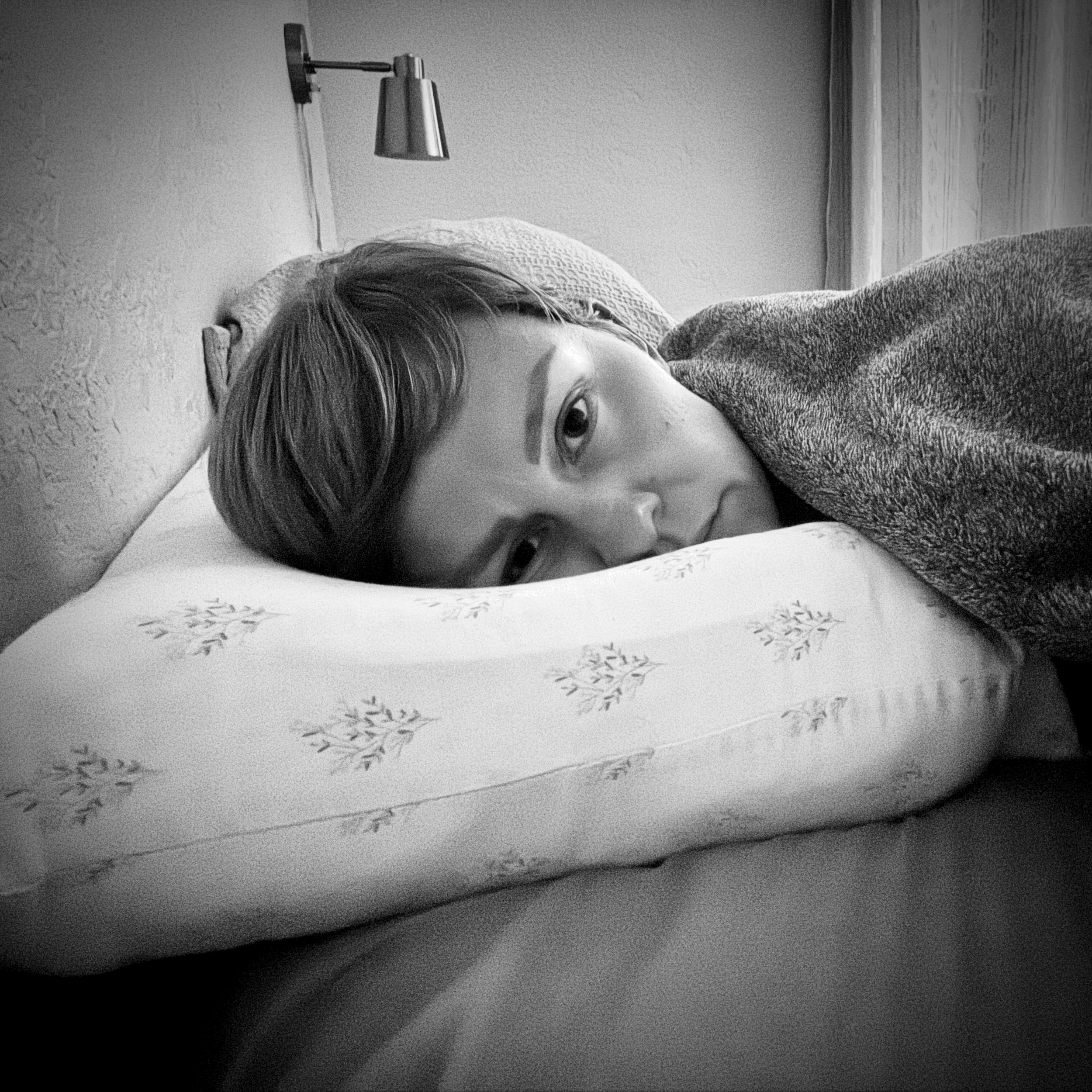
Autistic Burnout: What It Feels Like, How It Impacts Daily Life, and Ways to Recover
Autistic burnout isn’t just exhaustion — it’s a total shutdown of mind and body after too much masking, stress, and sensory overload. In this post, I share what autistic burnout really feels like, how to recognize the signs, and gentle ways to recover through rest, self-awareness, and compassion. Whether you’re autistic or supporting someone who is, this is a guide to understanding, empathy, and resilience.
By Frankie
Disabled Air Force Veteran | Chronic Illness Advocate | Medical Nerd
Understanding Autistic Burnout: Symptoms, Causes, and Coping Strategies
Today, I want to discuss something that doesn’t get talked about enough: autistic burnout. Whether you’re autistic yourself or supporting someone who is, this post will help you understand what burnout feels like, how it manifests in daily life, and ways to cope and recover.
What is Autistic Burnout?
Autistic burnout is a state of intense physical, emotional, and cognitive exhaustion that results from chronic stress, masking, and navigating a world designed for neurotypical people. Researchers describe it as a combination of prolonged social, sensory, and executive function demands that exceed an autistic person’s capacity to cope. Unlike regular stress or tiredness, autistic burnout can involve:
Persistent fatigue that isn’t relieved by sleep
Cognitive difficulties, like slow processing and memory problems
Emotional exhaustion and detachment
Sensory sensitivities or overwhelm
For me, it’s a fatigue you can feel in your bones — one that sleep or rest alone doesn’t fix. Often, I don’t notice how severe it is until it becomes overwhelming. My husband usually notices changes before I do. He’ll ask, “Do you think you might be in burnout?” and that’s when I start processing what’s happening inside me.
Signs and Symptoms of Autistic Burnout
When I experience burnout, it affects every part of my life:
Cognitive challenges: Thinking slows, memory worsens, and sometimes I can barely process information.
Communication difficulties: Spoken language becomes harder; I may hear something differently than what was said or need repetition.
Emotional exhaustion: I have little energy for emotions, often switching to research mode, focusing on my blog, or dissociating.
Social withdrawal: Phone calls, text messages, and social interactions feel draining.
Physical fatigue: A deep, bone-level exhaustion that isn’t relieved by rest alone.
Coping with Autistic Burnout
Recovery isn’t about pushing through — it’s about listening to your body and mind. For me, coping strategies include:
Engaging in special interests, like diamond painting
Taking restful downtime, such as relaxing in bed
Cuddling with my dog Phoebe, whose comfort and presence calm my nervous system
Spending time in nature, soaking in the quiet and grounding energy of the outdoors
Maintaining exercise routines, like lifting weights and walking, to keep my body grounded (IF you have the spoons)
Preserving structured routines, which provide stability during overwhelming periods
Recognizing the signs early and giving yourself permission to rest is an act of self-compassion.
Advice for Supporters
If you’re supporting someone autistic:
Understand that autistic burnout is real and serious, not laziness.
Offer patience, understanding, and practical support.
Respect their need for boundaries, rest, and low-demand activities.
Follow me on Facebook, YouTube, and Instagram for more about living with autism, chronic illness, and brain injury — and as always, stay resilient ❤️🩹