Two Operating Systems, One Brain: Living with Both Autism and ADHD
Autism tells me not to change a thing. ADHD tells me to change everything. I live somewhere in between — building a life that honors both my need for comfort and my craving for newness. I’m not broken for needing both. I’m just running two powerful programs that don’t always play nicely together.
By Frankie — Disabled Air Force Veteran | Chronic Illness Advocate | Social Scientist
Sometimes it feels like my brain runs on two competing operating systems — one built for structure, the other for chaos. One that craves predictability, and one that thrives on spontaneity. One that analyzes everything down to the molecular level, and one that forgets what I was doing mid-sentence because a bird flew by the window.
That’s what it’s like living with both Autism and ADHD — what many of us affectionately call AuDHD.
Before I Knew the Name for It
For most of my life, I just thought I was “too much” or “too intense.”
Too organized yet too distracted. Too sensitive yet too blunt. Too focused yet too forgetful.
As a kid, I was the one color-coding my school binders but losing my pencil three times a day. I loved rules — until they didn’t make sense. I’d hyperfixate on a project, pouring every ounce of energy into it for days, only to crash so hard afterward that I couldn’t function. Teachers saw potential, but not the exhaustion underneath.
Later, in the military, that duality became both a strength and a curse. I was laser-focused when I needed to be — calm in chaos, efficient, precise — but behind the scenes I was burning out. My brain was running 24/7 diagnostics, processing every sound, every tone of voice, every possible consequence. I didn’t know it then, but what I was calling “overthinking” was actually autistic processing, and what I thought was “just me being scatterbrained” was ADHD demanding dopamine and novelty.
The Diagnosis That Finally Made It Make Sense
It took years — and a lot of self-reflection — before I discovered that I was both Autistic and ADHD. It didn’t come from one defining test or moment, but from connecting patterns across decades of lived experience.
When I finally received both diagnoses, it felt like someone handed me the user manual for my own brain. For the first time, I wasn’t broken — I was simply wired differently.
But learning that you’re AuDHD is one thing. Learning to live as an AuDHD adult — to build systems around your wiring — is a whole different journey.
The Constant Push and Pull
Autism grounds me in routine. It gives me a deep love of structure, order, and precision. I find peace in patterns and predictability — in knowing what’s coming next.
ADHD, on the other hand, thrives on movement — the thrill of novelty, the spark of curiosity, the endless search for stimulation. It’s the part of me that wants to try five new projects at once, reorganize my workspace at midnight, and somehow forget where I put my coffee in the process.
Together, they form a tug-of-war that never really stops. My autistic side craves calm; my ADHD side gets bored by it. My ADHD side seeks excitement; my autistic side gets overwhelmed by it. It’s like having one foot on the gas and one on the brake at the same time.
And yet, in a strange way, that internal conflict is also what makes me, me.
The In-Between Space
Being both isn’t just a balancing act — it’s an identity that often feels invisible.
Sometimes it feels like I’m too autistic for ADHDr’s and too ADHD for Autistic people. The struggle is real. I live in the overlap — where structure and chaos collide, where community feels close but not quite aligned.
In ADHD spaces, I’m the one talking about sensory overload and needing silence — while others blast music and brainstorm out loud. In Autistic spaces, I’m the one interrupting myself mid-sentence because I had an idea I have to share before it escapes. Both sides are home, and yet neither fully fits.
It can be isolating, trying to explain how I can be both hyper-organized and completely disorganized, deeply empathetic yet socially drained, brilliant under pressure yet sometimes paralyzed by starting small tasks. But in this in-between space, I’ve also found people who get it. Other AuDHDers who live at the same intersection of curiosity, chaos, and clarity.
How It Shows Up in Everyday Life
My days are a constant dance between management and surrender.
I live by lists, calendars, and alarms — not because I’m Type A, but because if I don’t, everything collapses. I set reminders to eat, to rest, to move, to breathe. Some days it all works beautifully. Other days, my brain throws the whole system out the window and says, “We’re doing THIS now!”
There are times when I hyperfocus so deeply I forget the world around me — writing for hours, creating content, or researching a topic until my eyes blur. Then suddenly, I crash. My body demands stillness, my brain goes foggy, and the sensory overload hits like a wave.
Relationships can be tricky too. I love deeply and communicate intensely — but sometimes I miss social cues, overexplain, or get lost in my own thought spirals. I’ve learned to be honest about that:
“Hey, I’m not ignoring you, my brain just took the scenic route.”
And while masking used to feel like survival — trying to appear neurotypical so others wouldn’t misunderstand me — I’m learning now that unmasking is freedom. I don’t need to apologize for how my brain works. I just need environments that allow it to thrive.
The Strengths That Come From Both
For every challenge, there’s a mirror of strength.
My Autistic brain helps me see details others overlook — patterns, connections, inconsistencies. My ADHD brain helps me dream big and act fast. Together, they let me innovate, empathize, and create in ways I couldn’t if I were just one or the other.
I can take an abstract idea and bring it to life. I can organize chaos and find beauty in systems. I can feel emotions deeply and communicate them in ways that resonate.
That’s not to say it’s easy — there are still days of shutdowns, burnout, and sensory overload. But I’ve learned that those moments aren’t failures; they’re signals. My brain saying, “I’ve done enough. Time to rest.”
Learning to Work With, Not Against, Myself
I used to think I had to choose — to be the calm, structured version of me or the spontaneous, creative one. I thought one part had to win, that I couldn’t be both without constant friction.
Now I know better. I build routines that flex. I plan for distraction. I forgive myself for the days when focus is impossible, and I celebrate the ones when I’m on fire.
Some people think “balance” means achieving perfect control. For me, balance means permission — permission to ebb and flow, to rest and restart, to be both brilliant and scattered, both grounded and impulsive.
Living with Autism and ADHD isn’t a contradiction. It’s a spectrum within a spectrum — a reminder that the human brain was never meant to fit neatly into boxes.
Acceptance, Community, and Resilience
Since embracing my AuDHD identity, I’ve met others like me — people who’ve spent a lifetime feeling “almost understood.” We trade stories, share coping tools, laugh about our collective chaos, and remind each other that we’re not broken; we’re just different.
I’ve learned to build a life that supports both operating systems. To rest when I’m overstimulated, to feed my curiosity without guilt, to use movement when I can’t focus, and silence when I can’t think.
If you’re someone navigating the same intersection, know this: you’re not alone. There’s no right way to be both. You don’t have to justify your contradictions — they’re part of your brilliance.
Because sometimes, two operating systems can create something extraordinary — if you give them both the space to run.
✨ If this resonates with you, please follow along at @thechronicallyresilient — and as always,
Stay Resilient ❤️🩹
Autistic Burnout: What It Feels Like, How It Impacts Daily Life, and Ways to Recover
Autistic burnout isn’t just exhaustion — it’s a total shutdown of mind and body after too much masking, stress, and sensory overload. In this post, I share what autistic burnout really feels like, how to recognize the signs, and gentle ways to recover through rest, self-awareness, and compassion. Whether you’re autistic or supporting someone who is, this is a guide to understanding, empathy, and resilience.
By Frankie
Disabled Air Force Veteran | Chronic Illness Advocate | Medical Nerd
Understanding Autistic Burnout: Symptoms, Causes, and Coping Strategies
Today, I want to discuss something that doesn’t get talked about enough: autistic burnout. Whether you’re autistic yourself or supporting someone who is, this post will help you understand what burnout feels like, how it manifests in daily life, and ways to cope and recover.
What is Autistic Burnout?
Autistic burnout is a state of intense physical, emotional, and cognitive exhaustion that results from chronic stress, masking, and navigating a world designed for neurotypical people. Researchers describe it as a combination of prolonged social, sensory, and executive function demands that exceed an autistic person’s capacity to cope. Unlike regular stress or tiredness, autistic burnout can involve:
Persistent fatigue that isn’t relieved by sleep
Cognitive difficulties, like slow processing and memory problems
Emotional exhaustion and detachment
Sensory sensitivities or overwhelm
For me, it’s a fatigue you can feel in your bones — one that sleep or rest alone doesn’t fix. Often, I don’t notice how severe it is until it becomes overwhelming. My husband usually notices changes before I do. He’ll ask, “Do you think you might be in burnout?” and that’s when I start processing what’s happening inside me.
Signs and Symptoms of Autistic Burnout
When I experience burnout, it affects every part of my life:
Cognitive challenges: Thinking slows, memory worsens, and sometimes I can barely process information.
Communication difficulties: Spoken language becomes harder; I may hear something differently than what was said or need repetition.
Emotional exhaustion: I have little energy for emotions, often switching to research mode, focusing on my blog, or dissociating.
Social withdrawal: Phone calls, text messages, and social interactions feel draining.
Physical fatigue: A deep, bone-level exhaustion that isn’t relieved by rest alone.
Coping with Autistic Burnout
Recovery isn’t about pushing through — it’s about listening to your body and mind. For me, coping strategies include:
Engaging in special interests, like diamond painting
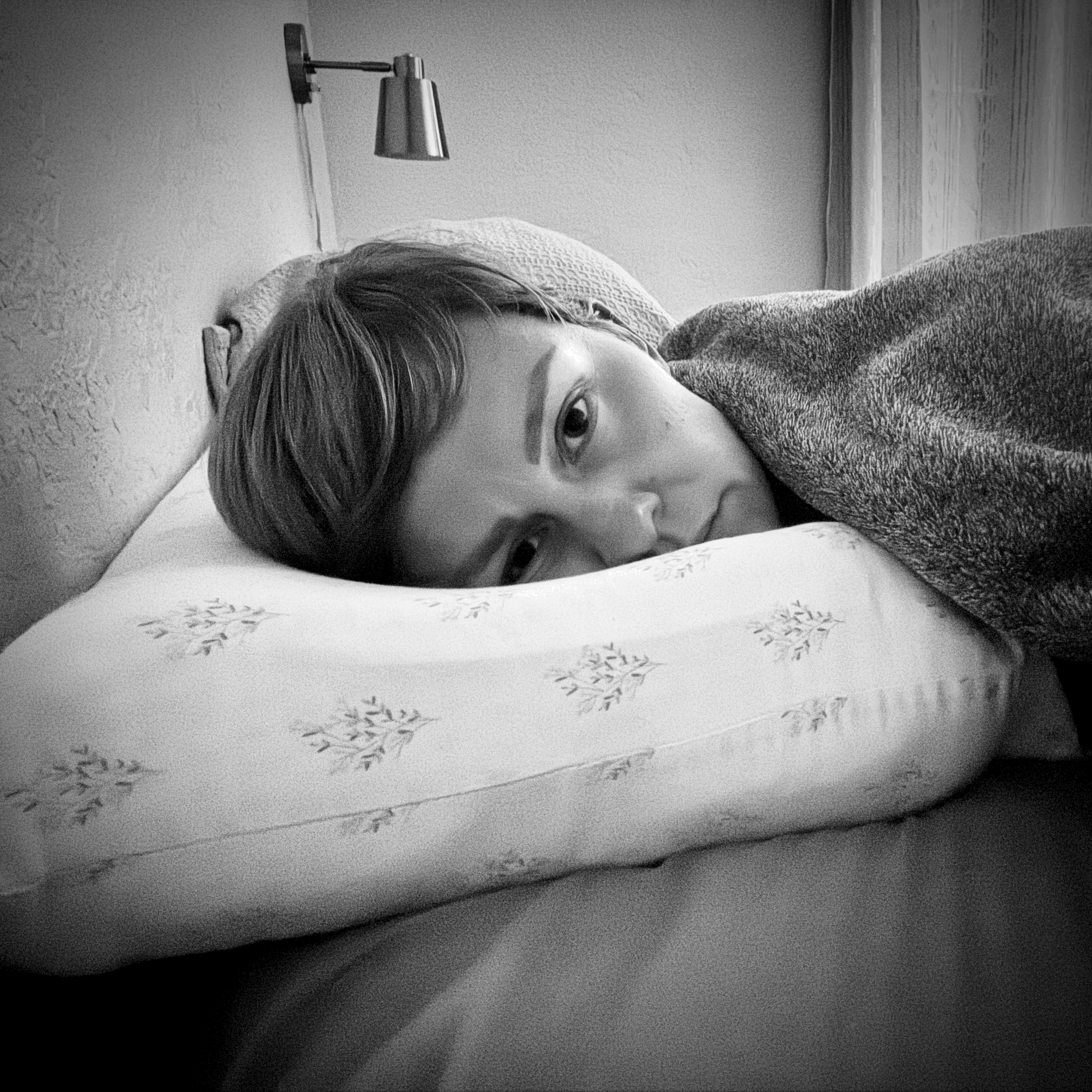
Taking restful downtime, such as relaxing in bed
Cuddling with my dog Phoebe, whose comfort and presence calm my nervous system
Spending time in nature, soaking in the quiet and grounding energy of the outdoors
Maintaining exercise routines, like lifting weights and walking, to keep my body grounded (IF you have the spoons)
Preserving structured routines, which provide stability during overwhelming periods
Recognizing the signs early and giving yourself permission to rest is an act of self-compassion.
Advice for Supporters
If you’re supporting someone autistic:
Understand that autistic burnout is real and serious, not laziness.
Offer patience, understanding, and practical support.
Respect their need for boundaries, rest, and low-demand activities.
Follow me on Facebook, YouTube, and Instagram for more about living with autism, chronic illness, and brain injury — and as always, stay resilient ❤️🩹