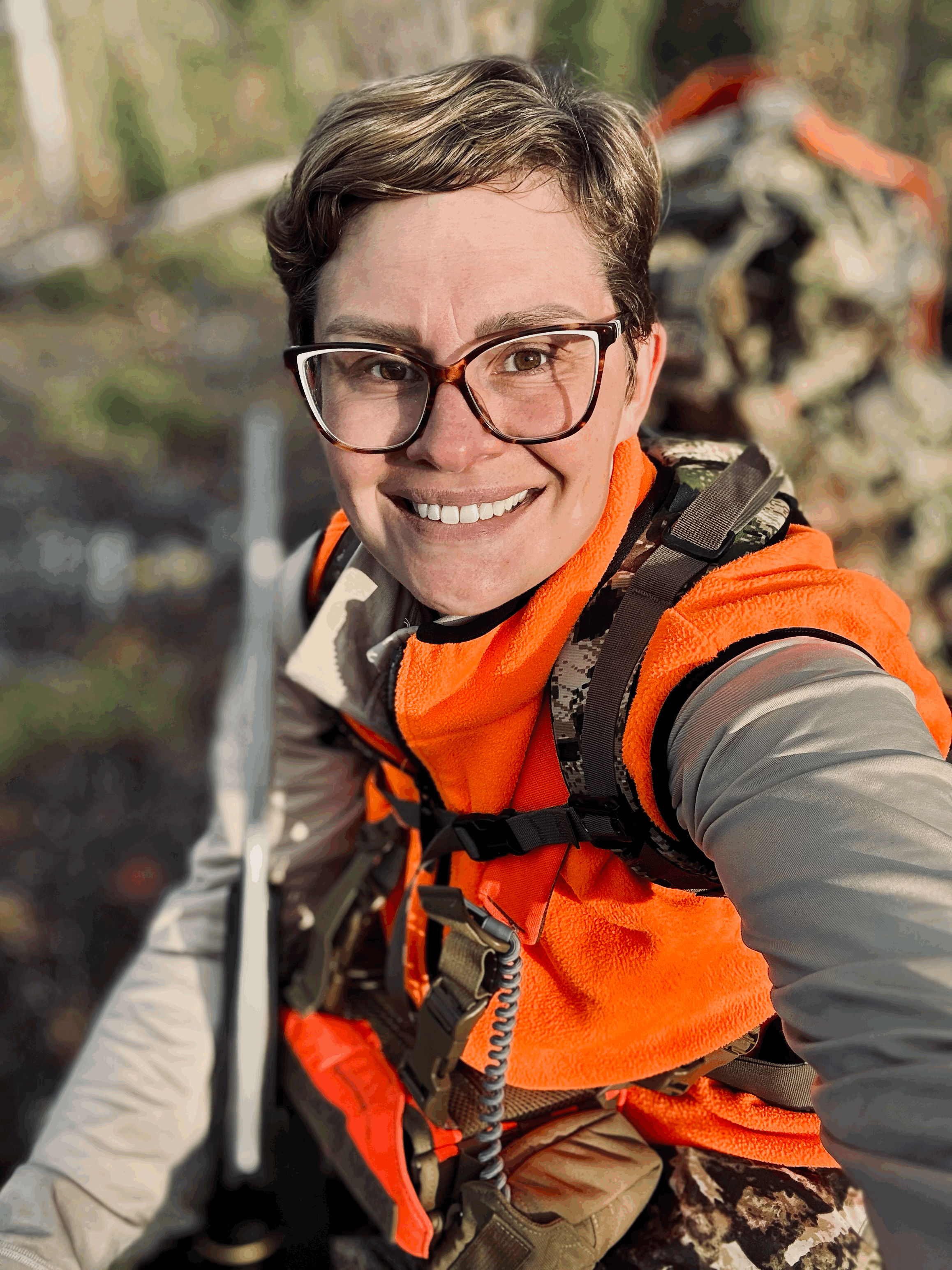
When the Body Mirrors the Mind: The Connection Between EDS, Autism, and Chronic Survival
For years, I thought my exhaustion was laziness, my pain was weakness, and my dizziness was dehydration. I pushed harder, fought longer, and ignored the quiet signals of my body until I couldn’t anymore. It wasn’t weakness — it was Ehlers-Danlos Syndrome, Autism, and survival. Now I move slower, softer, and more intentionally — not because I’ve given up, but because I’ve finally learned to listen.
© thechronicallyresilient
By Frankie — Disabled Air Force Veteran | Chronic Illness Advocate | Medical Nerd
For most of my life, I lived in survival mode without realizing it. My body was always tight, tense, and unpredictable — pain was constant, fatigue was familiar, and “pushing through” was my default. What I didn’t know back then was that my body wasn’t just tired — it was screaming for understanding.
The Hidden Thread
When I was diagnosed with Autism, ADHD, and Major Neurocognitive Disorder by my neuropsychiatrist who finally saw me as a whole person, something unexpected happened. In the middle of discussing my symptoms, he asked a simple question:
“Are you hypermobile? Do you have stretchy skin?”
No doctor had ever connected those dots with my medical history before. But that question — and the awareness behind it — changed the trajectory of my health. It led to the realization that I also have Hypermobile Ehlers-Danlos Syndrome (hEDS), a connective-tissue disorder that affects collagen throughout the body.
Hypermobile EDS — The Unseen Connection
Unlike other forms of Ehlers-Danlos Syndrome, hEDS doesn’t yet have a definitive genetic marker. It’s complex, often misunderstood, and dismissed for years as “just joint pain” or “being flexible.” But hEDS is more than that — it’s a systemic condition that affects joints, muscles, skin, and even the nervous system.
New research suggests that hEDS may have immunological roots, linking it closely to the neurodivergent population. Many of us who live with Autism and ADHD also show signs of connective-tissue differences — hypermobility, poor proprioception, and heightened sensory awareness. It’s as if our entire nervous system and connective-tissue matrix are speaking the same overstimulated language.
“My connective tissue is as sensitive as my emotions — both overstretch in the wrong environment.”
The Co-Morbidities They Don’t Warn You About
hEDS rarely comes alone. It brings a whole entourage of conditions that impact every system of the body. For me, that includes:
• POTS (Postural Orthostatic Tachycardia Syndrome): a form of dysautonomia that makes my heart race and blood pressure drop when I stand up. Some days, even showering or walking across the room feels like climbing a mountain.
• Gastroparesis: slow digestion that leaves me nauseated, bloated, and struggling to eat foods that once brought comfort.
• MCAS (Mast Cell Activation Syndrome): my body can overreact to harmless triggers — foods, scents, or temperature changes — causing hives, swelling, or even anaphylaxis without warning.
• Chronic Hypotension: low blood pressure that leaves me dizzy, foggy, and drained.
• Chronic Dehydration: because of how connective-tissue and autonomic dysfunction affect fluid balance, people with EDS often struggle to stay hydrated no matter how much water they drink. Electrolytes help, but the dehydration is physiological — not neglectful.
Each condition on its own is challenging; together, they create a body that’s constantly negotiating stability.
“My autonomic system forgot how to be automatic — so now I have to consciously manage what most people’s bodies do effortlessly.”
When “Just Work Out More” Isn’t the Answer
For most of my life, I thought my exercise intolerance was just me being “out of shape.” I was told to push harder, work out more, drink more water. But the thing is — that wasn’t true.
No matter how hard I tried, my body would crash. I’d get dizzy, lightheaded, nauseated, and overwhelmed by pain that lingered for days afterward. I thought everyone lived that way — constantly sore, constantly exhausted, always pushing through headaches, dizziness, and discomfort. But they don’t.
And yes, dehydration was part of the problem — but not in the way people assumed. For those with EDS and POTS, dehydration isn’t from lack of effort; it’s a symptom of our physiology. Our bodies can’t retain fluids properly, and our blood vessels don’t constrict as they should. No amount of water could fix that.
“I spent decades apologizing for symptoms that were never my fault — I just didn’t have the right language to name them.”
Living in Constant Survival Mode
Chronic pain trains the nervous system to stay on high alert, and autism compounds that hypervigilance. The sensory system doesn’t just process the world differently — it feels it differently. Every sound, texture, or light can amplify pain and fatigue.
That’s why so many autistic and EDS individuals live in a permanent state of fight, flight, or freeze. Our bodies aren’t malfunctioning; they’re overprotecting. When the connective tissue can’t support the body properly, the brain compensates by tightening muscles, increasing stress hormones, and scanning constantly for danger.
It’s survival — not choice.
Managing the Unmanageable
Living with EDS and its co-morbidities means every day is a careful balancing act between pushing and protecting. Healing isn’t passive — it’s an ongoing conversation with my body.
I do aquatic physical therapy two to three times a week when I can, because the water supports my joints while letting me move freely. It’s low-impact but strengthens my muscles and helps my cardiovascular system without triggering a flare. When I’m not in the pool, I aim for light cardio walks of one to three miles and try to lift weights several times per week to maintain muscle tone and joint stability.
These aren’t vanity routines — they’re survival ones. If I stop moving, my joints destabilize. If I overdo it, I crash. So every workout becomes a dialogue: What can my body handle today?
Because of low hunger drive, absent appetite, and chronic nausea, I use an app to track calories to prevent unintentional weight loss. Eating isn’t just about food — it’s structured self-care that keeps me functional.
And I go to therapy every other week, because when you live inside a body that constantly demands negotiation, you need a place to process the emotional weight too. Talking helps me release the guilt, fear, and exhaustion that come with chronic illness.
“Therapy keeps my mind flexible when my body can’t be. Movement keeps my body alive when my mind feels heavy.”
None of this is easy. Some weeks I’m strong; others I’m surviving hour by hour. But each step — in the water, on the trail, or in the therapist’s office — is a reminder that I’m still here, still adapting, still moving forward with purpose.
The Diagnosis That Finally Made Sense
When my neuropsychiatrist mentioned hypermobility, something clicked. I thought about all the sprains, the fatigue, the bruises that appeared out of nowhere, and the deep aches I’d brushed off as “normal.” I thought about how often I felt like my body and brain were out of sync — my mind racing while my body lagged behind, or vice versa.
That single moment of recognition reframed my entire past. It explained the chronic pain, the joint instability, the exhaustion after simple tasks. It even explained why sensory overload felt like physical injury — because in a way, it was. My body and mind were both running emergency protocols, just trying to survive.
“For the first time, I wasn’t broken — I was understood.”
Looking Back with Compassion
I look back now and see how much of my life was shaped by this unseen battle between my connective tissue and my nervous system. The anxiety that doctors misread as psychological was actually physiological. The fatigue that looked like laziness was the cost of existing in a body that never felt safe.
I used to think I was weak for not being able to keep up — now I know I was fighting on multiple fronts. My body was working overtime to hold me together, even as my mind tried to make sense of it all.
Living with the Body and Mind That I Have
Living with hEDS, Autism, ADHD, and Major Neurocognitive Disorder means existing at the crossroads of neurology, genetics, and survival. But it also means I’ve learned to read the language of my body — every ache, every tremor, every flare. They’re messages, not malfunctions.
And now that I finally understand them, I can live with more compassion, more grace, and more intention than ever before.
If this story resonates with you I hope you’ll stick around, follow my journey @thechronicallyresilient.
And as always, Stay Resilient ❤️🩹
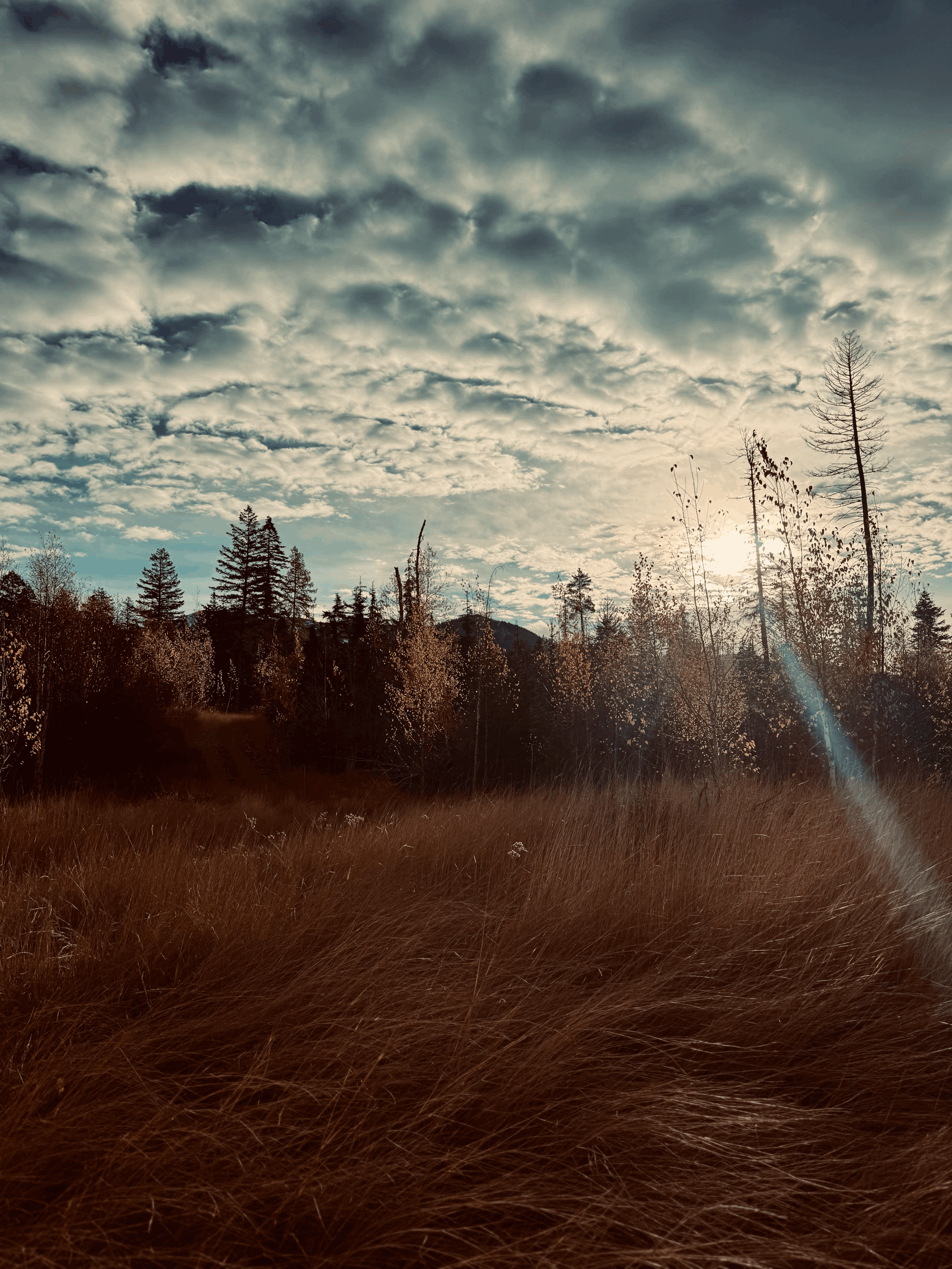
When the Wires Cross: Living with Autism, ADHD, and Major Neurocognitive Disorder (Post-Radiation Brain Injury)
There are moments when my brain feels like a tangled set of wires — sparks of clarity flickering between darkened circuits. I may lose words, forget paths I once knew, and fumble through conversation, but I’ve learned that resilience isn’t about restoring what was lost. It’s about finding new ways to illuminate what remains.
© thechronicallyresilient
By Frankie — Disabled Air Force Veteran | Chronic Illness Advocate | Social Scientist
Living with autism and ADHD is already complex. The constant juggling act between sensory overwhelm, executive dysfunction, and social decoding takes a tremendous amount of invisible effort. But when you add Major Neurocognitive Disorder (MND) — the medical term for dementia — caused by radiation-induced brain injury after Gamma Knife surgery, the wires of my mind don’t just cross — they sometimes go completely dark.
Understanding the Overlap
Autism and ADHD alone make life a constant negotiation between ability and exhaustion. For me, that meant years of masking — forcing myself to appear “normal,” pushing through sensory chaos, scripting conversations, and maintaining an image of competence even when my brain was on fire inside. But when I developed MND, masking became impossible.
Major Neurocognitive Disorder is often associated with aging, but it can happen at any age. It’s essentially dementia, caused by damage to the brain. In my case, it was a delayed consequence of Gamma Knife radiation used to treat a cerebral arteriovenous malformation — a rare tangle of blood vessels in my brain. What saved my life also fundamentally changed it.
Losing the Words — and Pieces of Myself
There are large chunks of my memory that are simply gone. I can’t recall moments that once shaped who I was. I struggle to find words mid-sentence, my thoughts evaporating before I can anchor them. Sometimes I lose track of what I’m saying entirely.
Conversations that used to feel natural now require enormous concentration. I can’t always interpret tone or filter background noise, and complex instructions leave me frozen. I get confused easily, lost in places I used to navigate without thinking. And every time it happens, I feel a pang of grief — not just for what I’ve lost, but for the people who’ve lost the version of me who could once keep everything straight.
“I used to be dependable — now I’m not, but not at any fault of my own.”
Relationships strain under the weight of my limitations. People assume I’m the same because I still sound articulate, but the truth is, I’m holding things together with fragile threads. My brain works differently now, and no amount of willpower can restore what radiation quietly took from me.
When Masking Becomes Impossible
Before MND, I could still mask my autism and ADHD well enough to survive most social situations. I could prepare scripts, hide overstimulation, and push through burnout. Now, I don’t have that luxury.
The fatigue that comes from cognitive impairment strips away every buffer I once relied on. The filters are gone. My patience for superficiality has worn thin. I say what I mean, even when it’s not what others want to hear. Some call that “difficult.” I call it unfiltered honesty.
“Neurodivergence stripped away my camouflage — but maybe it also stripped me down to my truest self.”
The Loneliness of Not Being Believed
Even doctors sometimes don’t believe me. I’ve become too good at masking my symptoms — at performing competence long enough to pass brief assessments. They see a well-spoken, intelligent adult and assume my brain injury couldn’t be “that bad.” But they don’t see the hours afterward when I crash, disoriented and drained from holding it together.
Being autistic already means living in a world that misunderstands your inner experience. Adding cognitive decline to that creates an isolation that’s hard to describe. It’s a loneliness not just of company, but of comprehension.
The Grief and the Grit
There’s deep grief in realizing that the person I was — the one who could multitask, solve problems, and organize chaos — isn’t coming back. But there’s also resilience in learning how to live differently.
I’ve learned to slow down. To rely on visual aids, notes, alarms, and routines. I give myself grace when I lose words mid-sentence. I find peace in smaller victories — remembering an appointment, finishing a task, making it through a conversation without losing my place.
“This isn’t the life I planned, but it’s still a life worth living — one that demands compassion, creativity, and constant adaptation.”
A Call for Understanding
Major Neurocognitive Disorder doesn’t just happen to the elderly. It can affect people in their 20s, 30s, and 40s — people with families, careers, and lives in progress. It deserves the same level of recognition, research, and empathy as any other neurological condition.
We need more awareness of what it means to live with overlapping neurodivergence and acquired cognitive disability — how it shapes communication, relationships, and identity. I may forget details, lose words, or repeat myself, but I never lose my capacity for love, empathy, meaning and understanding.
So I’ll keep telling my story — even when the sentences come slowly, even when the memories fade. Because somewhere out there, another person is quietly wondering if anyone understands what it’s like when your brain no longer functions the way it once did.
And to them, I want to say: I see you. You’re not broken. You’re rebuilding.
If this story resonates with you, follow my journey @thechronicallyresilient.
And as always, Stay Resilient ❤️🩹

From Life-Saving Surgery to Lifelong Consequences: My Fight for Answers
I share my story not just for awareness, but for anyone navigating life after Gamma Knife treatment. Brain radiation side effects and rare complications are rarely discussed openly — but they deserve to be. My journey is one of resilience, disability, and medical advocacy.
By Frankie
Disabled Air Force Veteran | Chronic Illness Advocate | Medical Nerd
“I never imagined the treatment that saved my life would take so much from me.”
If you’re here, maybe you’ve been where I’ve been — sitting across from doctors who once saved your life but now can’t explain what’s happening to your body. Maybe you’ve searched for answers in medical portals, scrolled through research articles at 2 a.m., or wondered if anyone would ever believe you again.
This is my story — of survival, loss, and a slow, painful rebirth into a life I never expected to live.
The Diagnosis That Changed Everything
In December 2018, I was diagnosed with a cerebral arteriovenous malformation (AVM) — a rare, tangled web of blood vessels deep in my brain. At the time, I was an active-duty medic in the United States Air Force, thriving in a high-pressure environment where precision and strength were part of my daily life.
When the diagnosis came, it felt like a betrayal by my own body.
I wasn’t the patient — I was the healer, the one others turned to in crisis.
My AVM was too large for open surgery, and on January 31, 2019, I underwent Gamma Knife stereotactic radiosurgery, a targeted form of brain radiation designed to destroy the AVM over time. The doctors were confident. I was told it was safe — precise, effective, controlled.
And it was. Gamma Knife saved my life.
But no one warned me about what else it might take.
“I went from fighting for the lives of others to fighting for my own.”
Within a week, I developed bilateral pulmonary emboli — blood clots in both lungs — triggered by my oral contraception. I survived that too, but my recovery was complicated and frightening.
A year later, my lungs failed me again. After months of shortness of breath and fatigue, I underwent a bronchoscopy and mediastinoscopy. The diagnosis: pulmonary sarcoidosis, a rare autoimmune disease that attacks the lungs and lymph nodes.
I was exhausted — but hopeful. I thought maybe this was just part of the healing process.
I was wrong.
When the World Went Silent
In September 2019, while hunting, I suddenly lost hearing in my left ear. One moment, I was aware of the world — the sound of my breath, my heartbeat and the frost crunching under my boots — and the next, there was silence. I was hiking the rolling hills of eastern Montana chasing antelope with my husband when suddenly there was a high pitched ringing in my left ear followed by that muffled hearing you get after firing a rifle without hearing protection. Except, my hearing never came back…
Eventually, I lost hearing in my right ear too and now I wear hearing aids to accommodate for some of my hearing difficulties.
Doctors couldn’t explain it. They called it idiopathic (no known cause) sudden sensorineural hearing loss, and every test came back inconclusive (allegedly). Actually, initially it was blamed on an extremely rare complication of sarcoidosis, neurosarcoidosis, or sarcoidosis. of the nervous system which can cause sensorineural hearing loss. This didn’t make sense though because my MRIs were not consistent with neurosarcoidosis.
With my medial background I naturally began doing my own research. That’s when I discovered studies linking Gamma Knife radiation to hearing loss and even scarier, cognitive impairment depending on which brain regions were affected. Before ever experiencing cognitive decline I reached out to my neurosurgeon and radiation oncologist through my MyChart portal messaging in December 2019, asking if my hearing loss could be related to my gamma knife surgery, looking for validation of what I already knew to be true.
They didn’t reply in writing. They called instead. I remember the words clearly — “That’s not possible.” My husband remembers the conversation too too.
But I knew something was happening inside my brain.
“It felt like my mind was slipping away, piece by piece.”
By 2021, my cognitive began impacting my life and I didn’t even realize it.
I forgot tasks, misplaced simple information, showed up wrong place wrong time, lost my train of thought mid-sentence.
I had always been sharp — the Air Force medic who thrived under pressure — and suddenly, I couldn’t function. I lost my job as a clinical receptionist, something that had once come naturally to me and theoretically should be super easy given my past profession. It devastated me, embarrassed me, brought about shame and deep unsettling fear for my future.
I wasn’t lazy. I wasn’t unfocused.
I had a brain injury — and no one believed me.
The Diagnoses That Finally Named My Reality
In 2022, I underwent a comprehensive neuropsychiatric evaluation. The results were both validating and devastating:
Major Neurocognitive Disorder
Autism Spectrum Disorder
ADHD
Non-Verbal Learning Disorder
Math Disability
During that same evaluation, the doctor asked a simple question that changed everything:
“Are you flexible?”
I showed him — the bendy joints, the stretchy skin I’d always joked about as a kid. His eyes widened. That led to a referral and, finally, a diagnosis of Ehlers-Danlos Syndrome (EDS), a genetic connective tissue disorder that explained my whole life — my chronic pain, neurodiversity, fatigue, and joint instability.
“Everything finally had a name — but no one had warned me any of this could happen and even worse they wouldn’t admit it could have happened.”
By 2023, a new MRI confirmed what I already felt: stable but permanent brain damage — areas of encephalomalacia and gliosis, meaning my brain tissue had been injured and scarred. It was described as a “chronic treatment effect.”
The damage is stable.
But it’s irreversible.
In June 2024, after years of monitoring, my AVM had finally shrunk enough to be surgically removed. The resection was successful, but I temporarily lost left-sided vision, which slowly returned after months of recovery as well as more white matter brain damage.
It felt like every victory came with a loss, although I'd do it all over again, to save my life.
Living With the Aftermath
Today, my daily life is a careful balancing act.
I live with permanent cognitive and sensory deficits — and a long list of conditions tied to Ehlers-Danlos Syndrome, including:
POTS (Postural Orthostatic Tachycardia Syndrome)
MCAS (Mast Cell Activation Syndrome)
Chronic dehydration and hypotension
Gastroparesis and unintentional weight loss
Chronic pain, fatigue, and insomnia
Spinal instability with bulging discs and synovial cysts
“Every day is survival disguised as routine.”
I rely on structure and technology to function:
AI tools to help me write and remember,
Shared calendars, reminder apps and detailed notes track my days an responsibilities,
and the unwavering support of my husband and mother to help me stay on track and accomplish what I need to day to day.
I undergo IV hydration therapy multiple times a week to manage chronic dehydration, POTS and hypotension.
I carefully monitor my diet and weight just to maintain enough stability to take my ADHD medication safely.
Every aspect of my existence is managed, measured, and monitored.
The Fight for Answers
I have spent years researching, documenting, and trying to understand how my brain — the same one I once trusted to heal and care for others — became the source of my greatest challenges.
When I reached out in 2019, I wasn’t looking to blame anyone. I was scared. I just wanted to understand.
But my questions were dismissed and I was denied timely and thorough diagnosis, treatment and resources that could have made the transition from able to disabled a lot less traumatic. I was made to feel it was “all in my head”, that I was creating stories.
Now, after years of rehabilitation following the triggering of my chronic illnesses, I’m finally strong enough. mentally and physically to ask again and to fight for the truth.
In November 2025, I’ll meet with a neurologist who is willing to review my MRIs and explore the possible connection between my Gamma Knife treatment and my neurological and sensory disabilities.
It will be the first time any doctor has truly taken my concerns seriously.
“Healing doesn’t just mean surviving — it means being heard.”
I’m not seeking sympathy — I’m seeking truth and understanding.
Because I believe every patient deserves to know the full range of possible outcomes before consenting to treatment as well as what their resources are for recovery, support and accommodation if the unthinkable were to happen.
I believe every medical record should reflect a patient’s communication attempts, even when the answers are uncomfortable or are the result of care that was meant to save their life.
And I believe that “rare complications” should still be discussed — not dismissed.
What I Want Every Patient to Know
If you’ve ever been dismissed, told “it’s not possible,” or made to feel like your pain is an inconvenience — please hear me: you are not alone.
Document everything.
Ask questions, even when it makes people uncomfortable.
Request copies of your imaging, lab work, and communications.
And if your instincts tell you something is wrong — trust them.
Because you are the one living in your body.
You are the one carrying its history.
“I am not broken — I am disabled. And I am still here.”
I am forever grateful for the surgery that saved my life. But I wish I had been told the whole story — the possibilities, the risks, and the lifelong adjustments that might follow.
I’ve had to grieve the person I was — the Air Force medic, the quick thinker, the multitasker.
Now, I am someone new: slower, softer, but stronger in ways I never expected.
This is my story — not of loss, but of reclamation.
Of finding strength in limitation.
Of turning silence into testimony.
And if you’ve made it this far, please know — your story matters too.
💬 Follow My Journey
If this story resonates with you — if you’ve lived through medical trauma, chronic illness, or the invisible fight to be believed — I invite you to walk this path with me.
You can follow my journey and advocacy work on Facebook and Instagram, where I share updates, insights, and reflections on life after survival.
➡️ @thechronicallyresilient
And as always, Stay Resilient ❤️🩹